(STILL) INSIDE A RAPE TRIAL: What really happens at court (3/4)
script for Rape on Trial/Ep 2: Tariq's Trial (blog post 2/4)
Rape on Trial is a legal documentary podcast using real-life, fully anonymised cases to critically examine the investigation and prosecution of rape and serious sexual offences in the criminal justice system in England & Wales.
This blog reproduces the first part of the original written script for Episode 2 which sees us back in the public gallery of a Crown Court somewhere in England & Wales for the final days of Tariq's trial on charges of rape and false imprisonment.
Topics covered in this episode: agreed facts; the defence case; the defendant's evidence-in-chief; cross-examination of the defendant; judge's directions; split directions; prosecuting counsel's closing speech; defence counsel's closing speech; judge's summary of the evidence and final directions; evidential reasoning and the operation of rape myths and prejudiced stereotypes and assumptions; the jury verdict.
Keywords: criminal law; criminal evidence and procedure; criminal justice; trial procedure; courtroom advocacy; adversarial legal system; comparative law and procedure; common law legal system; legal case study; criminology; forensic linguistics; forensic psychology.
Open Educational Resource - Legal English Listening Practice - Legal English Comprehension Practice - Legal English Vocabulary - Legal English in Real Court Proceedings: Criminal Trial – Academic English - Language of Law - Legal Reasoning - Evidential Reasoning - Forensic Reasoning – Court Translator Practice
Content warning
This podcast explores the workings of the criminal justice system, including the investigation and prosecution of serious offences involving sexual and physical violence.
Episodes may contain detailed and sometimes graphic accounts drawn directly from case files, witness testimony, and court proceedings, including those involving adult and child victims.
Listener discretion is advised.
This is the continuation of the script from ep 02 of Rape on Trial. Click here to listen to the episode.
Day 4 of trial
Cross-examination of the defendant resumes
Ten past ten, Friday morning. The last day of trial.
Tariq’s back in the witness box. No niceties. No warm up. No reminder of where the witness has got to in the evidence. Mr Neil is straight back to it.
Did he make a joke about Ruby not having invited him as a friend on social media? he asks.
‘No’, says Tariq.
‘She’s making that up?’
‘Yes.’
Then on to Tariq’s insistence that Ruby had initiated their sexual encounter—that he’d read things, sexual things, from her behaviour. From Ruby showing him the photos of herself, that she was flirtatious as soon as he’d got back from the post office.
But Tariq’s starting to pull back from this now—he’s saying, well, no it was when she started doing the dancing. ‘Only when she held me, that’s when it’s come to my attention that she consents to sex.’
Mr Neil points out—although I’m fairly confident we’ll all have noticed this ourselves—this isn’t what Tariq told police during his interview, and it’s not what he was saying in court yesterday.
‘You’re drawing back from your previous answers because you realise how ridiculous they are’, says Mr Neil.
‘What’s ridiculous about them?’ Tariq says quickly. He’s getting frustrated now.
Tariq looks away from Mr Neil and appeals, again, directly to the jury.
Heatedly, he tells the jurors that, after his arrest, he didn’t sleep at all. ‘I have tension’, he says, ‘because there’s an allegation against me for the first time in my life. If I wanted to make things up, he says, I’d go no comment. I would come to court and say everything I want to say. I wouldn’t say to the police everything. This is the first thing. The second thing, he says, she called to the police the next day—'
Tariq’s cut off by the judge again. ‘It’s not for you to give a speech’, she tells Tariq sternly; he’s to answer counsel’s questions.
Tariq’s answer now is that when he told police that he thought by showing him photographs, she was consenting, he meant she was consenting to being friends, not to sex.
Mr Neil then takes Tariq, slowly and systematically, through every statement in his police interview and every answer he gave in evidence yesterday that contradicts Tariq’s current position.
But Tariq’s sticking to his guns: he isn’t lying; he hasn’t just invented this at trial; made it up on the spot. He didn’t think Ruby showing him the photos and talk of holidays was consent to sex. It was her behaviour—dancing with him, holding him—that indicated consent to sex.
‘Given that she’s coquettishly, sexually suggestively moved towards you’, says Mr Neil, ‘enlarged the photo, and it’s clear she’s interested, you felt it right to ask anyway, reasonably, on your evidence, if you could stroke her hair before you did that?’
‘Yes.’
‘And she expressly agreed, “yes, you can stroke my hair”?’
‘Yes.’
Mr Neil then painstakingly takes Tariq through every act—every stroke, touch, kiss, and so on—for which Tariq says he sought and was expressly given consent by Ruby.
Mr Neil pauses for a moment. Then he says:
‘Before penetration occurred, I count seven highly specific questions that you say in interview you asked Ruby regarding what sexual things you were permitted to do to her. Six if we discount the slow dancing. Can you touch her hair? Can you touch her leg? Can you kiss her? Can you touch her breast? Can she lie down? Can she undo her trousers? At each stage, you say, you are asking a question seeking her permission.’
‘Yes’, says Tariq.
Mr Neil pauses again, like he’s contemplating something. Eventually, he asks simply, ‘Are you sure?’
‘What?’ says Tariq.
‘Are you sure that that happened?’ asks Mr Neil. ‘That you were asking all those questions as the sexual congress proceeded between the two of you?’
‘I’m sure’, says Tariq. ‘Also I’m asking her, “how much money you want?” If I want to do something, I ask.’
‘Thing is’, says Mr Neil, ‘it doesn’t appear to be a very spontaneous sexual encounter, on your account. All these questions you pepper her with. It’s almost like a tick box form. Did it happen?’
‘Okay’, says Tariq. ‘I work in health agency in health care and at the hospital. Before I can work for anyone, they do a course. It’s about consent. Even I want to check the blood sugar, can I take the blood sugar. I have to ask people if they want help before I touch them. My whole life is consent. I can’t touch anyone without consent. If you touch anyone without consent they will call the police. This is normal. Everywhere.’
‘You’re telling us she’s made a sexual overture to you and yet at every stage, according to you, you’re asking question after question. That’s a lie, isn’t it? To create the impression, the implausible impression, that you were absolutely fixated on consent and that you wouldn’t do anything without her express consent for every single touch, every single manoeuvre, in that sexual encounter. And it’s rubbish, isn’t it?’
‘No’, says Tariq.
Now Mr Neil takes Tariq through the sexual acts themselves: where Tariq was, where Ruby was—that Ruby was pinned against the wall – no; that Tariq was on top of her on the floor – no. That she couldn’t have made a dash for it, like Tariq had suggested in his evidence.
‘She could’, argues Tariq. ‘When my wife rang.’
‘Your wife may or may not have rung’, says Mr Neil, ‘I don’t know. But this is you throwing it into the mix to suggest that Ruby had a chance to escape, if what you say is true.’
‘Do you mean I’m telling lies?’ asks Tariq
‘Oh yes that’s what I mean’, says Mr Neil.
The prosecutor then proceeds to put Ruby’s version of events to Tariq, step by step—literally. Move by move. Touch by touch.
Tariq disagrees with everything Mr Neil puts to him.
‘And then’, says Mr Neil, ‘sick of the struggle, you manhandled her on to that rug by the shoulders and laid her on the floor.’
Tariq laughs.
Mr Neil stops in his tracks.
‘Is this funny?’
‘Yes’, laughs Tariq. ‘What you say to me is funny.’
‘It’s funny, is it? In what way is it funny?’
‘You see my body-size and you saw her body size’, says Tariq. ‘How I try to overrun her? She’s younger than me. she’s gymnastic. This move, I can’t do it’—he’s gesturing—'she put her leg to her head, to the back’, he says. ‘I can’t do it. She has strong legs.’
Mr Neil seems incredulous: ‘So, what you say, so I can be clear’, the prosecutor says slowly, ‘is that it’s completely unfeasible that you overpowered her and manhandled her because she’s bigger and stronger than you?’
‘She’s healthier and she’s younger than me’, says Tariq. ‘She’s stronger than me.’
Mr Neil gives that a moment to sink in before he continues.
‘You got on top of her and pulled down her trousers, her leggings, until you’d got access, didn’t you?’
‘No.’
‘Then you raped her. Penetrated her. While she tried to shield her vagina with her hand, didn’t you?’
‘No.’
‘And when you finally penetrated her, then you had to work at it, didn’t you? She screamed.’
Tariq laughs again. Louder this time.
‘Oh, that’s funny too’, Mr Neil responds. ‘What’s funny?’
‘It’s a building full of people’, says Tariq. ‘People would hear. If she say, “ooh”, all the people would come.’
‘Except if you turn your phone up, to try to prevent that. Which you did, didn’t you?’
Tariq shakes his head and smiles. ‘If she say “ooh”, all the people would come’, he says again.
We’re covering ground quickly now.
No, Tariq wasn’t irritated with Ruby afterwards. Yes, he thought they were starting a relationship, that there was a future for them. No, he hadn’t stopped her from leaving. No, he hadn’t blocked the door. He hadn’t told her she needed to finish her training—why would he do that when she’d told him she didn’t want the unpaid work, counters Tariq.
‘The object was to keep her in that room until she saw reason’, says Mr Neil. ‘Until she’d told you she wasn’t going to report you. Until she’d agreed to take money for what you had done together—'
At this, there’s a snort from the witness box. I look up from my notepad and Tariq’s smirking.
‘Funny again?’ says the prosecutor. ‘Big smile on your face, you can explain that in a minute, but answer the question.’
‘This is all lies’, says Tariq. ‘It’s strange. It’s not logical.’
Mr Neil seems to reflect for a moment.
Like he’s undecided.
Then he says, slowly—'Just, I don’t want to make too much of this but, yesterday, when you were giving answers to my learned friend, you broke down, apparently, at various points. Today, a bit of a volte face; a bit of a turn. You’re finding things funny. I’m just wondering, why the change?’
‘Yes, I did. My daughter is all times asking about me; when are you coming home. Yesterday, I just remember my family. And I just tell the truth. And today you tell me things that are not logical’, says Tariq.
That tell-tale change in the tone and pitch of Tariq’s voice is back.
He begins to cry.
That loud, sniffling cry.
Again.
‘But you’re starting to get upset now?’ observes Mr Neil
‘Yes, sniffs Tariq. ‘If you sit with me, five minutes, you will know I am not a crazy person to do criminal act in my office.’
On to the cash point. The ‘derisory twenty pounds’. The messages Tariq sent to Ruby the following day about the job and what and when he’d be able to pay her. ‘Gaslighting her’, says Mr Neil, ‘trying to make it all look matter of fact, making her doubt herself.’
And, Mr Neil suggests, that Tariq deleted all his previous messages to Ruby, but kept the later ones so that, if the police turned up, all they would see is normal text traffic, as though nothing happened. Albeit, says Mr Neil, that Tariq was sending these messages at 4am in the morning.
That, says Tariq, is because he was at morning prayer.
And, says Tariq, he deleted the previous messages because, when he’d called Ruby the day after the interview, she hadn’t picked up and she hadn’t texted. So, he didn’t want to keep in contact with her anymore, he says. ‘If someone don’t want you, you don’t want her.’
This, Mr Neil points out, doesn’t explain why Tariq deleted only those messages before their so-called sexual encounter, but not the ones he’d sent after.
‘You kept the later messages because they potentially exonerate you’, suggests Mr Neil, ‘you did it because you raped her, you falsely imprisoned her, and you’re lying through your teeth about it today, yes?
Tariq doesn’t answer. Instead, he says his phone is with the prosecutor, it’s evidence, he says. Nobody’s asking to go through Ruby’s phone to see if what she says is true or not.
‘You didn't do your job properly,’ he tells Mr Neil angrily.
The judge interrupts: ‘No, Tariq! what's your answer to the case that Mr Neil has just put to you: that you raped and falsely imprisoned Ruby.’
‘No,’ Tariq says.
No further questions.
With no re-examination by Miss Roberts, or any questions from the judge, Tariq returns to the dock.
It’s a little after quarter to twelve. Tariq’s just spent almost three hours being cross-examined by Mr Neil.
There’s one more agreed fact, read into evidence by Miss Roberts, relating to the CCTV footage shown yesterday of Tariq and Ruby walking along that street. It’s basically just a record of where it came from.
And that, Miss Roberts tells the judge, completes the case for the defence.
The jury is told to have a quick break and that, when they’re back, they’ll get the first part of judge’s directions, followed by closing speeches, and then final directions. She’s hoping, says the judge, that she’ll be sending them out this afternoon to begin deliberations.
Judge’s Directions
It really is a quick break. The judge clearly wants to press on. When the jury’s brought back in, her Honour begins her directions.
She starts by reminding the jury that they have a different function to the judge. She’s responsible for law, they’re responsible for deciding the facts. She’s going to tell them how to approach the evidence, including how to deal with the summary of the evidence she’ll give them later.
She tells them they must assess the evidence critically, carefully and without emotion. She says that, in assessing a witness’s evidence, they might find it helpful to ask themselves whether the witness was trying to tell them the truth, and, if they were, whether their evidence was accurate and reliable. They’ll want to look at what the witness said, how it was said, whether their account was supported or undermined by other evidence and whether it makes sense.
Don’t speculate, she warns them. You’re your decisions on the evidence you have heard.
She speaks to the measures used for the witnesses. The prerecorded video of Ruby’s police interview, her being screened in court. That the purpose is to make sure the witness feels as comfortable as possible, that such measures are entirely neutral and must not be taken against the defendant in any way.
Tariq’s interpreter too—that although Tariq speaks reasonable English, he has needed some help with words or phrases.
She moves on to the so-called rape myths direction. Again, this is standard fare: you’ll hear it in every rape trial. The jury is told not to let false assumptions or misleading stereotypes they may have about rape affect their decision making in this case. They’ve taken a legal oath to try the defendant on the evidence. She tells them there’s no typical rape, no typical rapist, no typical victim. That rape can take place in almost any circumstances, between different kinds of people, people who know each other, relations, strangers. There’s no typical rape and no typical reaction. No typical response.
‘Delay’, she says. ‘You must not assume that just because it was not mentioned straight away, it must be untrue.
The defence say that the fact the complainant didn’t immediately say she had been raped is because she was not telling the truth; that she had consensual sex with Tariq and was embarrassed and ashamed.
The prosecution point out that this doesn’t make any sense and if it were true, had she kept quiet, no one need ever have known what she had done and was now regretting.’
‘Remember’, says the judge, ‘people react to situations in different ways.’ She finishes by stating that ‘a later complaint does not render an allegation untrue in the same way that an allegation is not necessarily true just because a complaint was immediately made.’
She’s not expressing an opinion, she says, she’s explaining these points so they will think about them.
Distress, she says. The jury has seen evidence of Ruby crying on the bus, they’ve heard about her distress in Ruby’s own evidence, and from her friends.
The prosecution suggest this distress supports their case that Tariq had just attacked Ruby. The defence, on the other hand, suggest it’s an act, caused through shame and embarrassment.
The jury needs to bear two things in mind when they consider Ruby’s emotional state: first, there is no normal state—people respond differently. Second, it is possible for someone to put on an act if they choose to.
‘If you are sure Ruby’s distress was genuine’, says the judge, ‘then it may help you to decide whether the prosecution has proved its case. If you’re not sure it was genuine, well, then it would not provide support for the prosecution’s case.’
First complaint, she says. This relates to the 999 call, and the statement from Ruby’s mum regarding what Ruby told her Tariq had done. This, says the judge, is not independent evidence of what did or didn’t happen between Ruby and Tariq. It may help them decide whether Ruby has been consistent and whether her evidence is true.
She turns now to the defendant’s character. They’ve heard Tariq has no previous convictions. Good character, she says, is not a defence but it is relevant. He’s given evidence and, his good character is a positive feature which they should take into account in his favour when considering whether they accept what he’s told them.
Second, the fact that he has not offended in the past may make it less likely he acted as the prosecution allege. The importance attached to Tariq’s good character, and the extent to which it helps in this case, is for them to decide.
Tariq has given evidence. ‘He didn’t need to do so’, she tells the jury. ‘He’s entitled to sit at the back of the court and say to the prosecution, you’ve brought this case, you prove it if you can. Giving evidence does not mean Tariq takes on any burden of proving anything. Certainly, he does not have to prove he is innocent’, she says. ‘The prosecution must prove him guilty.’
In cross examination, Tariq suggested a motive for what he says are false allegations. The suggestion is that she’s had consensual sex with Tariq that she’s then regretted. He has also claimed in his police interview that he had considered she may have been going to exploit him.
‘These points were not put to Ruby in cross examination to answer,’ she tells the jury. ‘They amount to no more than speculation by him. Even if you do not accept that Ruby did lie because she felt awkward, it does not mean you should in some way hold it against the defendant.
Remember, the defence does not have to prove anything’, she says. ‘He doesn’t have to make you sure that there is some improper motive. The prosecution have to make you sure that, firstly, there is no improper motive for making such allegations, and, second, that they are truthful and accurate.’
The defendant coming from the dock to give his evidence does not matter, she says. Tariq’s evidence is to be treated the same as everyone else’s.
Her Honour confirms that the jury has a written copy of all these directions in their bundle.
She now directs them to a second document in their bundles, entitled Route to Verdict.
Again, this is standard fare. The Route to Verdict sets out the individual charges against the defendant, gives the legal definition of each offence and a series of questions, a step-by-step guide, if you like, to the individual elements of an offence that need to be proved by the prosecution in order to convict.
Tariq is charged with two different offences: rape, and false imprisonment.
This, the judge says, means the jury will be returning two verdicts and that they must consider the evidence against and for the defendant on each count separately.
‘On each charge’, she reiterates, ‘it’s for the prosecution to prove guilt. It is not for him to prove innocence. The prosecution will only succeed in proving the defendant guilty of any charge if they make you sure he’s guilty, nothing less will do. If, after considering all the evidence, you are sure that he is guilty, you must convict. If you are not sure he is guilty, your verdict will be not guilty.’
She then carefully takes the jury through the necessary elements for rape, defining each term—penetration; consent; reasonable belief in consent—as she goes along.
She does the same for false imprisonment.
In all, judge’s directions take around half an hour.
It’s a lot for a jury to take in.
It is.
They’re legal directions. They’re presented as simply and straightforwardly as possible, but they cover a lot of ground and, especially when you’re looking at the definitions of particular offences, they cover a lot of complex, legal ground.
Don’t worry, her Honour tells the jury, it’s not a memory test. The documents are theirs to keep until they’ve reached a verdict.
Court now breaks for lunch—a shorter lunch than usual. Again, her Honour is obviously keen to keep this case moving forward.
Read the final post for the conclusion of episode 2.
This episode script from Rape on Trial is licensed under a Creative Commons Attribution–NoDerivatives 4.0 International Licence (CC BY‑ND 4.0). © Dr Candida Saunders.
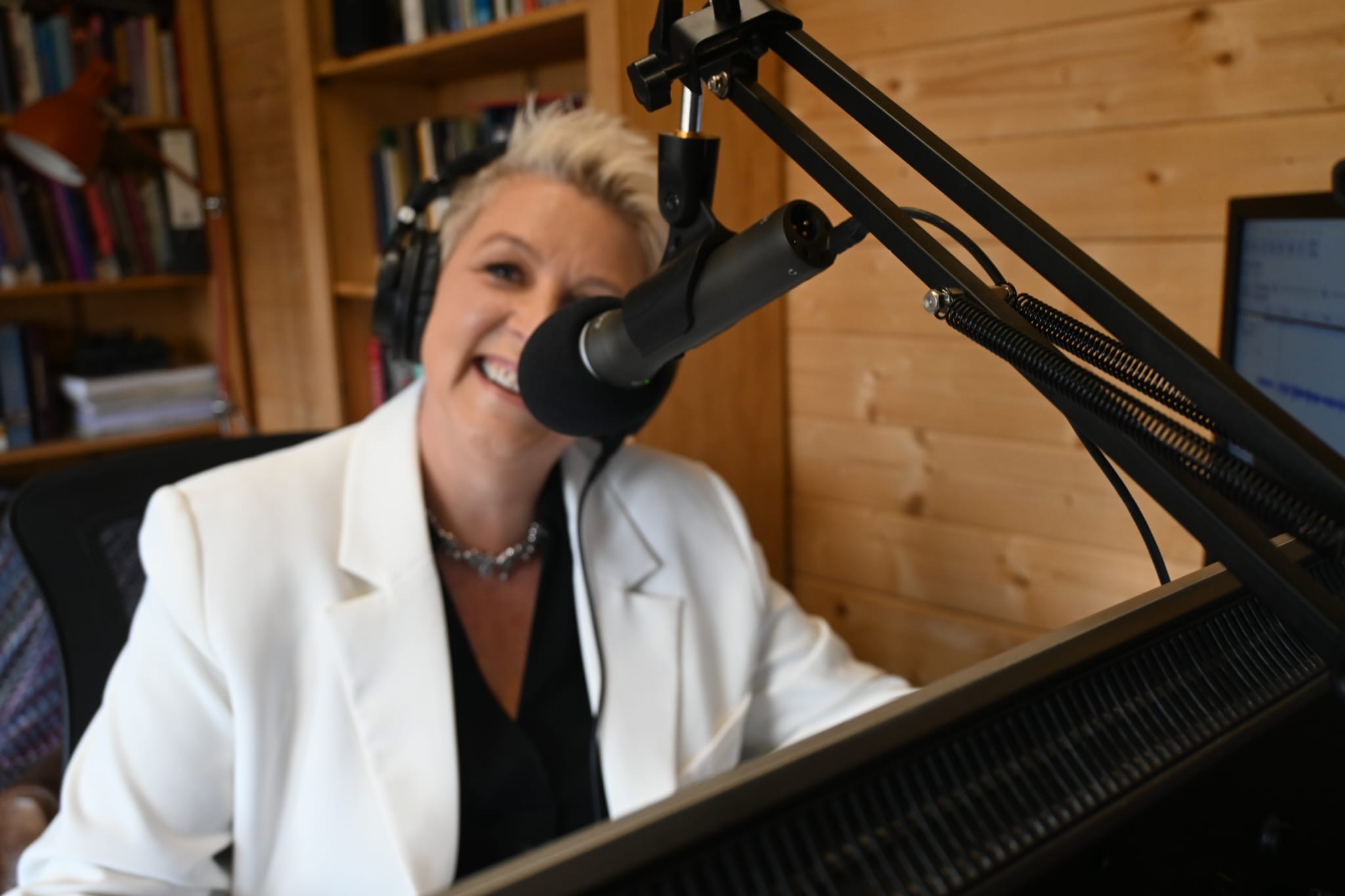
Legal academic / Author / Creator and Host of Criminal Justice in Action
A legal scholar specialising in criminal law and procedure, Candida spent two decades researching and teaching at the University of Nottingham. Her academic work focuses on how the criminal justice system operates in practice, particularly in rape and sexual assault cases, and those involving vulnerable witnesses. She has conducted extensive empirical research, including interviews with police officers and Crown Prosecutors about their decision-making, detailed analysis of case files, and first-hand observation of criminal trials in the Crown Courts.
Her research has been funded by bodies including the Nuffield Foundation and the Economic Social and Research Council, and has been published in leading peer-reviewed journals such as the Criminal Law Review, Oxford Journal of Legal Studies, International Journal of Evidence & Proof, and British Journal of Criminology.
In Rape on Trial, Candida draws on this research so we can see for ourselves how the criminal justice system really operates in the investigation and prosecution of rape and serious sexual offences. Not what we assume happens. Not what the conventional wisdom tells us happens. But what the evidence actually shows.
Every claim is grounded in data. Every episode is informed by rigorous academic inquiry.


