INSIDE A RAPE TRIAL: What really happens at court (2/3)
script from Rape on Trial/
Rape on Trial is a legal documentary podcast using real-life, fully anonymised cases to critically examine the investigation and prosecution of rape and serious sexual offences in the criminal justice system in England & Wales.
Topics covered in this episode: prosecuting counsel’s opening speech; special measures for vulnerable and intimidated witnesses under Youth Justice and Criminal Evidence Act 1999; ‘Achieving Best Evidence in Criminal Proceedings’; ABE video; complainant’s evidence-in-chief and cross-examination; admissibility; agreed evidence; agreed facts; evidence of the officer in the case/investigating officer; how evidence of a defendant’s police interview is adduced by the prosecution.
Keywords: criminal law; criminal evidence and procedure; criminal justice; trial procedure; courtroom advocacy; adversarial legal system; comparative law; common law legal system; legal case study; criminology; forensic linguistics; forensic psychology.
Open Educational Resource - Legal English Listening Practice - Legal English Comprehension Practice - Legal English Vocabulary - Legal English in Real Court Proceedings: Criminal Trial – Academic English - Language of Law - Legal Reasoning - Evidential Reasoning - Forensic Reasoning – Court Translator Practice
Content warning
This podcast explores the workings of the criminal justice system, including the investigation and prosecution of serious offences involving sexual and physical violence.
Episodes may contain detailed and sometimes graphic accounts drawn directly from case files, witness testimony, and court proceedings, including those involving adult and child victims.
Listener discretion is advised.
Day 2 of trial
10 am, Wednesday morning. We’re back in Court 1 for day 2 of Tariq’s trial.
Mr Neil is telling the judge about the ongoing problem with the prosecution witness, Selena.
Selena is a friend of Ruby’s and Mr Neil was intending to call Selena as a witness this afternoon. She’s not currently at court, she’s refusing to come to court, and, following further enquiries yesterday, it seems that the reason she’s not coming to court is because Ruby’s told her not to.
This, says the judge, must be investigated today. The police need to contact Selena and get a statement. She reiterates, this needs to be done today.
With that, the jury is called in and, once they’re back in their seats, Ruby’s ‘Achieving Best Evidence’ (ABE) video is played to the court. It’s just shy of three quarters of an hour long.
The complainant’s evidence-in-chief
In the video, Ruby’s in a specialist interview suite. She’s on a large sofa behind a low table, like a coffee table, with a mic on it. There’s an officer sitting in front of her, closest to the camera, but with her back to it.
As Ruby tells her story, she fiddles incessantly with a tissue.
It’s this account that the prosecutor’s opening speech was based on, so, I’m going to summarise it; reduce it right down.
She tells the officer she’d seen a job advertised online. Her friend, Selena, had told her about it. The ad was for care work but Selena said the guy was looking for a secretary—she couldn’t do the hours, maybe Ruby would be interested. She was. She sent a text to the mobile number listed in the ad. Tariq responded. Her antenna was up immediately, she says, because Tariq responded to a phot on her WhatsApp status, rather than reply to her message in the conversation thread. She thought that was peculiar.
She’d sent him her CV, like he asked, and he said she didn’t have the relevant experience. He’d offered to interview her anyway and give her training. She agreed. Ruby says, he contacted her the night before the interview offering to give her a lift. She had a little trouble with his offer, but, she says, she pushed those doubts to one side. She declined and made her own way to the interview.
When she got to the office, she was, again, a bit thrown because the offices were not quite as she’d understood them to be. She was under the impression that she was attending the Head Office of a substantial company. In fact, it was just one small, rented room in a larger office building that a lot of other companies worked out of.
She and Tariq had chatted about the role and then her training began. She was happy to do the training, she says, because she wanted a job. But it wasn’t real training; she was given pointless tasks to do, like doing research on Google and memorising what she found.
While she was working, Tariq had asked all sorts of questions: about the photos on her status; about her not friending him on social media; and about her college studies. She told him she’d studied dance, and he asked her to show him—to dance for him. She’d said no and made excuses—that she’d need to stretch and warm up.
He’d got a prayer mat out for her to dance on, but she’d continued to say no and carried on with her work. Then he asked if she was single. She told him that, yes, she was. All of this, she thought, was unusual.
Then Tariq said he needed to go to the post office. He went out and left her in the office alone. While he was gone, Ruby took a video of the office on her phone and sent it to her friend with a message, ‘What the fuck? This is the office guys!’
When Tariq came back, things changed. More inappropriate questions and conversation from Tariq with him showing her photographs on his phone.
Then he’d pointed to a box on a table and asked her to look in it for a paper. While she looked, he approached her. He’s asking her again about the dancing, playing music now, on his phone.
She’s retreating, he’s advancing, she’s pushed up against radiator… he’s touching her, kissing her, trying to pull her trousers down, she’s saying no. He pushes her down to the floor, then he rapes her. All the while, she’s screaming and crying. He doesn’t stop. He turns the music up on his phone to drown out her cries.
When he’d finished, he cleaned Ruby and himself with tissue.
Afterwards, she says, he wouldn’t let her leave. She hadn’t finished her training, he told her, and, if she didn’t stay, she wouldn’t get paid for the day. She tried to leave anyway, but Tariq blocked the door.
He asked her if she was going to tell her friends. Eventually, he said he needed to pay her.
They left the office, he took her to a cash point, and gave her twenty pounds. Then she got on the bus to town.
She was crying on the bus, she said. ‘I just felt like I couldn’t breathe’, she’s saying to the officer.
‘The ticket inspector came on to the bus and because I was in the very first seat, she come up to me first and I was crying and she said, are you okay? And at first she asked if I’d got a ticket and I was just like, I paid when I got on and I was crying. She could see that I was distressed. She said are you okay again and I said yeah, I’m fine and then she walked on to other people’.
When she got into town, Ruby went to a chain store. She bought new underwear. Pants. Then she went to a chemist and bought the morning after pill. She was still crying, she says, and the pharmacist asked her if she was okay. ‘I said, yeah, I just want the pill’.
She’d arranged to go to her friend Tia’s house after her training, so she just went. As planned. When she got there, she asked to use Tia’s shower and washed herself. Tia could obviously see something was wrong, but Ruby told her she didn’t want to talk about it.
Tia wanted to go into town. Something about a broken nail and needing to go to the nail bar and then meeting up with a couple of friends of theirs, Selena and Hayley. Ruby went along.
They all went for lunch. Ruby ordered her favourite meal but didn’t touch it. Her friends could see there was something wrong and were pushing her to talk to them, but she told them, ‘if I start talking about it, I’ll just start crying’.
That night, she had a video call with her mum.
Mum could tell there was something wrong; she kept asking Ruby questions. She didn’t tell her mum exactly what had happened, just that he’d touched her.
Mum told her to go to the police, and to take her sister with her. They’d gone to the local police station the following afternoon, but it was closed. They went home and Ruby called 999.
The screen goes black.
That’s the end of Ruby’s video evidence.
Court immediately adjourns briefly so the jury can take a break. And so Miss Roberts can take instructions from Tariq.
It’s a good 50 minutes before the trial resumes.
Further examination-in-chief (live)
Ruby’s in court now. She’s going to be cross-examined live.
This could have been done via a live video link with Ruby somewhere other than here in court 1. But she's opted to be in court instead, behind a screen.
The screen means Tariq can't see her, and she can't see him. Neither can we. She’s screened off from the public gallery. Just the judge, jury, and counsel can see Ruby. And the court was empty when she was brought in.
We don’t go straight into cross-examination, however. First, Mr Neil, prosecuting counsel, tells Ruby he has one or two additional questions following on from her video evidence.
You understand that we have seen a video of an interview that was conducted way back last year between you and police, he asks.
Yes, Ruby confirms.
He asks about the video Ruby took of the office while Tariq was at the post office. The ‘what the fuck?’ video that she’d sent to her friend.
That video is now played for the jury on the court's screen: a silent, shaky video recording that scans a small, sparsely furnished and yet still cramped and untidy office.
‘Why did you do that?’ Mr Neil asks simply.
‘Because, like, he made out he'd got a big company,’ says Ruby. ‘When I got there, I was taken back. The office was so small. There was nothing there’.
Ruby, and the court, are now directed to a number of photos of the office. The jury have these photos in their bundle.
Using these photos, Mr Neil takes Ruby through the physical layout and where everyone was at various points that morning. Where was she? Was she sitting or standing? Which desk? Where was Tariq? Then, where was the box she was asked to look in?
‘Can you remember precisely what was in there when you went in to look at it?’
‘Like, three sheets of plain paper,’ says Ruby.
Mr Neil’s now asking Ruby about where the rape itself took place. She’s up against the radiator, she says.
Mr Neil hands Ruby a pen.
‘Could you just draw for me two little stick figures, one representing you, one representing him, so we can all see what you mean.’
Ruby marks on the photo where she was pinned, and where Tariq was. The usher shows the annotated photograph to the defendant, defence counsel, the judge, and finally to the jury.
Mr Neil then moves to the WhatsApp messages and profile pictures—establishing a critical distinction that wasn't clear in the ABE video.
The first picture is of Ruby with a friend’s baby on her knee. This is her actual profile picture on WhatsApp—the photo that appears when someone messages her.
The second photo, the photo of Ruby in a swimsuit that Tariq had commented on when he first contacted her, that photo was in her "story" which is a separate public space in the app.
It’s one of a number of photos on her story.
But it’s the only one of her in a swimsuit.
And it’s the only one Tariq responded to directly.
Next, Mr Neil covers the text exchange between Ruby and Tariq on WhatsApp. All the messages have been downloaded from Ruby’s mobile telephone and printed off. Copies of the messages are being distributed to the judge and the jury now.
We can’t see these print outs—they’re not displayed on the screen. And they aren’t all being read out. But two things are clear: first, it’s the entire exchange from Ruby’s first contact having seen the ad, sending in her CV, providing ID, setting up the interview, the offer of training, the offer of a lift to the office, and so on.
But there are some additional messages. Messages that Tariq sent to Ruby the day after the alleged rape.
We don’t know what those messages were, we can’t see them and Mr Neil hasn’t read them out. All we know is what Ruby is confirming now to Mr Neil, that she didn’t respond to any messages from Tariq after her interview.
Finally, Mr Neil clarifies a few finer details about how Ruby found the job advertisement. He then tells the judge he has no more questions.
The judge does. Her Honour leans forward slightly, towards Ruby.
‘Ruby,’ she says, gently, ‘if I could just ask one question. To be absolutely clear. The video that Mr Neil referred to? The one that you made with police officers last year. Were you telling the truth when you made that video?’
‘Yes,’ Ruby answers.
The judge nods. ‘Yes. Miss Roberts?’
It’s time for cross-examination.
Cross-examination of the complainant
Miss Roberts stands, gives the black robe that is sliding down her back a tug and a winch, and addresses Ruby.
Well, Ruby, she says, I’m now going to ask you some questions on behalf of the defendant, alright? About the events around—she gives the date of the interview—What’s important is your answer’, Miss Roberts says. ‘I’m going to suggest some things to you, and it’s for you to either agree or disagree with them, okay?’
‘Okay’, says Ruby.
Miss Roberts now spends around ten, twelve minutes going over what seem to be quite mundane, trivial details: where the job was advertised; that a friend had alerted Ruby to the relevant ad; the dates and times of the messages between the complainant and Tariq setting up the interview; where, precisely, the office building was.
She then asks Ruby to confirm that she knew Tariq had viewed a number of photos and videos on her WhatsApp status, including the swimwear photo, two days before the interview.
‘Yes’, says Ruby.
And that Ruby had told the police that this was a quote, alarm flag?
‘Yes’, agrees Ruby.
That, knowing Tariq had viewed those images, Ruby hadn’t then taken them down?
‘No’, says Ruby.
And that, even though Ruby felt this was an alarm flag, she still decided to go to Tariq’s business address on the day, as arranged?
‘Yes’, agrees Ruby.
It’s a subtle undermining, on Miss Roberts’ part, rather than a ‘gotcha’ moment. There’s no overt hostility, no feigned incredulity, no accusations that Ruby is lying or laying it on a bit thick. Just this unspoken insinuation—'well, if you already knew this man was looking at your photos, if your alarm flags were up, why did you even go?’—that’s left hanging in the air.
Miss Roberts having made her point (sort of) moves on.
There’s now another ten minutes or so of, again, mundane yes/no questions about the office building that, honestly, don’t seem to have much to do with anything.
She asks Ruby about the other companies she’d noticed that worked from the same building, and what lines of business they were in. Maybe it’s an effort to make the unimpressive office seem more impressive—I don’t know.
Whatever Miss Roberts’ point here is, she doesn’t explicitly make it.
And, if we were supposed to infer it ourselves, if it’s another insinuation, well, it’s gone right over my head.
Then an inordinate amount of time is spent on where the door to Tariq’s office was in relation to the stairs and landing. And what colour the door was.
‘It might not matter’, says Miss Roberts—and, honestly, I can’t say I have any idea why any of this would matter—but, ‘it might not matter’, says counsel, ‘I’m just trying to get my bearings’.
Finally, with whatever point she was trying to make here utterly beyond me, Miss Roberts moves on. She’s asking, now, about when Tariq left the office.
‘Right. So, he’s left the office’, says Miss Roberts, ‘by that stage, were you uncomfortable being there?’
‘Yes.’
‘When he left, he didn’t lock you in though, did he?’
‘No.’
‘You could have left at that point, if you’d wanted to?’
‘Yes.’
‘If you were uncomfortable, the door was open—it wasn’t locked—you could leave?’
‘I guess so’, says Ruby.
‘But you chose to stay?’
‘Yes, I thought it would be a bit unprofessional just to leave while he had left.’
‘And you took this video: why?’
‘Because I was speaking with my friend and I was saying how, like, “look at the office”. Because he was saying how, like, it’s—so, basically, he had like another like business with somebody else so this was, like, a new thing he was doing, like, a new building. So I was, like, kind of taken back [sic]. So I sent it to my friend and she was going to call me to, like, so I could leave.’
‘And did she phone back?’
‘By the time she called me I’d left.’
‘Right. So, with regard to timings, you said to her to phone you. Was there any sort of time for her to phone you?’
‘I said, like, within the next half hour.’
‘So you thought it would be unprofessional to just leave?’
‘Yes.’
Miss Roberts moves immediately on to the conversation between Ruby and Tariq when he got back from the post office: That they were talking about holidays? ‘Yes’; that Tariq had told her he’d looked at her profile? ‘Yes’.
The conversation about dance and gymnastics… ‘And did he ask you to perform some gymnastics for him?’ counsel asks.
'Yes.’
‘And, at this stage, is this when the rug was produced?’
‘Yes.’
‘And you did do some leg stretching on this mat, is that right?’
‘No, he kept asking me to.’
‘And he asked if he could stroke your leg and he did, didn’t he?’
The judge interrupts: ‘Pause there’, she says to Miss Roberts and then turns to Ruby; ‘Did he ask to stroke your leg?’ the judge asks.
‘No.’
‘Did he stroke your leg?’ asks the judge
‘No.’
Miss Roberts resumes her questions: ‘And in relation to the dancing, you did dance with him, didn’t you?’
‘No.’
‘He asked you to teach him to dance, didn’t he?’
‘Erm, yes.’
‘And he handed you his phone so you could select some music?’
‘Erm, no.’
‘Did you touch his phone?'
‘When he showed me photos. When he was showing me, I was touching the phone, yes. But that’s the only point.’
‘And at this stage, you didn’t try to leave, did you Ruby?’
‘No’, says Ruby. Her voice is getting much quieter now.
‘And you began to show him some dance moves, didn’t you?’
‘No.'
‘Holding each other, arm in arm. Did that happen?’
We don’t hear Ruby answer this.
Whether that’s because she’s said it quietly or because she shook her head, I don’t know. Remember, we can’t see Ruby; she’s behind the screen. But you can hear sniffing and erratic breathing—it sounds like Ruby’s crying.
Certainly, she sounds distressed. But she’s obviously communicated that no, that didn’t happen, somehow because Miss Roberts is moving on again.
She asks a series of questions about the incident at the heart of this trial: what Miss Roberts is presenting, on Tariq’s behalf—on his instructions—as a consensual sexual encounter; a portrayal with which Ruby consistently disagrees.
Yes, he’d asked if he could kiss her, no, she hadn’t agreed that he could. No, she’d told him she didn’t want to. That she was moving her face away trying to avoid his kisses. That at no point had she, quote, let him kiss her. That, yes, he had touched her breast, but again, no, she hadn’t quote ‘let him’.
No, she hadn’t, quote, allowed him to pull down her trousers as Miss Roberts is suggesting.
She did resist, she was saying no. She hadn’t pulled her own trousers down when she lay herself down on the floor beside him--she hadn’t ‘let him’ touch her.
‘It's the defendant’s case’, says Miss Roberts, ‘that you let him do all of this, up to this stage, is that right or not?’
‘No’, says a clearly weeping Ruby. Emphatically.
Miss Roberts now suggests that it was only once Tariq had inserted his penis, an act which caused Ruby some pain, it was only then that Ruby asked him to stop. And that, as soon as Tariq realised he was hurting Ruby, he had immediately withdrawn.
Ruby doesn’t agree with any of this.
Miss Roberts presses on: ‘You told the police that, after he’d withdrawn his penis, Tariq ejaculated?’
‘Yes’, Ruby agrees.
She’s asked if Tariq wiped her with the tissue, or whether she’d wiped herself.
‘He did that’, says Ruby.
She’s asked how long she remained in the office afterwards.
‘No longer than 5 minutes’, says Ruby.
Miss Roberts asks whether, after Tariq had wiped her, they carried on talking normally.
‘No. I just went to get my bag.’
‘You went to get your bag? Did he say anything to you?’
‘He just kept telling me to stay.’
‘He didn’t say this in an angry fashion, did he?’
‘No.’
‘He just wanted you to stay?’
‘Yes.’
‘And was that the words that he said?’
‘He told me that if I left now, I wouldn’t be able to, like, continue the training.’
‘He didn’t stop you from leaving, did he?’
‘Yes.’
‘He didn’t put his hand on the door handle, did he? Or put his foot against the door?’
‘Yes, he did.’
‘When was the discussion to go to the bank? Was it inside the office?’
‘It was at the door’, says Ruby. ‘He said if I would come to the bank, he would let me go.’
‘So what did you say when he said that to you?’
‘I said it was okay, that I just want to go home.’
Miss Roberts now asks whether, when they got to the exit of the building, Ruby then made her way home.
‘I went to the bank and then I went home’, says Ruby.
‘If you just wanted to go home, why did you go to the bank with him?’ asks Miss Roberts.
‘I don’t know’, says Ruby quietly.
‘You walked to the bank with him?’
‘Yes.’
‘And, during that time, you and he were chatting, weren’t you?’
‘No.’
‘He didn’t have hold of you, did he?’
‘No.’
‘Preventing you from leaving?’
‘No.’
‘You walked together.’
[I don’t hear Ruby’s answer to this]
‘This was a week day, a busy day, wasn’t it?’
‘Not really that busy’, says Ruby.
‘There were people on the street, not just the two of you?’
‘Yes.’
‘Did you try and get some help from anyone else?’
‘No.’
‘Did you stop any of them?’
‘No.’
‘And when you got to the bank, you didn’t go inside, did you?’
‘No.’
‘It was a cashpoint machine outside the bank?’
‘Yes.’
‘And he went to use the cashpoint, is that right?’
‘Yes.’
‘And what did you do?’
‘I just stood there.’
‘And he asked you how much money you needed, didn’t he?’
‘No.’
‘You say you just stood there. In fact, you came towards him at the machine, didn’t you?’
‘I don’t know. I don’t know whether that’s right or not.’
‘And were standing next to him?’
‘I know I was standing by him but I don’t know that I came towards him.’
‘And he took out £20 and handed it to you?’
‘Yes.’
‘Did you take it or not?’
‘Yes, I did.’
Miss Roberts now says that Ruby and Tariq then walked together to the bus stop, and that Tariq had waited with her for the bus. That they were talking at the bus stop, that he’d asked her to come back to the office later that week and that Ruby had agreed. She’d arranged to go back at 3 on Friday, after college.
Ruby rejects all of this.
Unsurprisingly, Miss Roberts skips very quickly over the bus journey we’ve seen the footage from this morning. She simply states that Ruby caught the bus, went to a clothing store, and on to a pharmacist. But that’s it. That’s as much as she say
She also skips over Ruby going from the city centre to her friend, Tia’s house and showering. Instead, she’s moved swiftly on to Ruby being back in town with Tia later on.
‘Who wanted to go to the nail bar?’ she asks, casually.
‘Tia did’, says Ruby.
‘Did you have your nails done?’
‘No.’
Ruby agrees that she and Tia then met up with Selena and Hayley and that, no, she didn’t tell them what had happened: ‘I just said that he had me up the wall and tried to kiss me,’ she says.
Ruby agrees that the four friends went on to get something to eat.
‘You didn’t contact the police that evening?’ asks Miss Roberts.
‘No, it was the following evening’, says Ruby.
Miss Roberts then directs Ruby back to the printouts of the text messages between her and Tariq.
Those printouts show two deleted messages sent from Ruby’s phone to Tariq around 10 o clock the night of the rape.
Ruby agrees that, yes, she sent and then deleted those messages. She can’t remember what the messages said.
About 5 am the next morning, Tariq had messaged Ruby asking what she’d deleted. Ruby didn’t reply.
A couple of minutes later, Tariq sent Ruby three further messages, all along the lines of negotiating the terms of her voluntary work.
Ruby again says she can’t remember what her two deleted messages said, and she hasn’t replied to any of the messages from Tariq.
‘Now’, says Miss Roberts, ‘finally this. It’s the defendant’s case, Ruby, that you agreed with him and, by your behaviour, consented to have sexual intercourse with the defendant, is that right or not?’
‘No.’
‘And it’s only afterwards that you regretted it?’
‘No.’
‘And were embarrassed.’
‘No.’
‘But what happened in the office that day was with your consent.’
‘No, it wasn’t.’
‘Thank you very much’, says Miss Roberts, ‘I have no further questions for you’.
Neither does the judge.
But Mr Neil does.
Re-direct
‘Very, very briefly, Ruby’, says Mr Neil, ‘it was put to you that when you walked to the bank with the defendant, you didn’t try to seek help from anybody in the street. Was there in fact anybody in the street to whom you could run?’
‘I don’t remember’, says Ruby
‘You don’t remember. In any event, you were, on the face of things, walking with him?/
‘Yes’, she says flatly.
‘And, at the bank machine, it was put to you that you came towards him to which you said, “I don’t know whether that’s right or not”, correct?’
‘Yes.’
‘And that you accepted from him the money that he gave you?’
‘Yes.’
‘And then afterwards you went to the bus stop, he had asked you if you’d come back and you said, “I don’t know”. So you understand what’s being put to you here, that you had consented to sexual relations in the office, and that your behaviour on the way to the bank—failing to seek help etc—was of a piece with that?’
‘Yes.’
‘If you had to describe how you were feeling on that short walk to the ATM in one word, would you have a go at that for me?’
‘I don’t know’, she says. ‘Scared?’
‘Anything else?’
‘I just felt sick.’
‘Tell me about your logical thought processes and how they were working at that time.’
Ruby does give a brief answer here but, she’s really quiet and flat by now. She sounds exhausted. I can’t make out what she’s saying.
But I can see that the jury’s leaning in.
They’re listening intently.
They haven’t really taken their eyes off her since she got in the witness box.
Mr Neil continues. ‘It’s been put to you’, he says, ‘just at the end of my learned friend’s cross-examination that you are inventing this allegation, effectively, as far as lack of consent is concerned, because you were embarrassed at what had gone on in the office. Yes?’
‘Yes.’
‘That’s what was put to you, you understood? How are you feeling today, standing in that witness box relating your account of those events to this jury please?’
‘I don’t know’, says Ruby, ‘I don’t remember.’
‘I’m sorry?’ says Mr Neil. He looks up from his notes. He looks surprised. ‘How are you feeling is what I’m asking’, he says. ‘At this moment?’
‘I feel sick’, she says. The flatness of that quiet voice is devastating.
‘You feel sick?’ asks the judge
‘Yes.’
‘You feel sick’, repeats Mr Neil. ‘And the course of the investigation which has lasted several months and has involved you being interviewed on video by the police and having court dates and so on and so forth. How did that process make you feel please?’
She takes a moment before she finally says quietly—almost in a whisper—'I didn’t feel like myself’.
‘I’m sorry’, says the judge, ‘I didn’t catch that’.
‘I didn’t feel like myself’, repeats Mr Neil.
‘I didn’t feel like myself’, says Ruby.
The judge thanks Ruby and says she’ll be allowed to go in a moment. ‘It’s unlikely that you’ll have to come back to court’, she tells Ruby, but, when she leaves the court, she’s not able and must not discuss her evidence with anybody else at all.
With that, the jury is sent for lunch and the court is cleared—that means anyone in the public gallery and the defendant sent out of the courtroom, so that Ruby can be accompanied out of the court without being observed.
It’s a little after 1 pm.
In total, Ruby’s spent about an hour and a quarter in the witness box this morning.
Twenty minutes of live evidence-in-chief, 49 minutes in cross-examination, and three minutes of re-examination.
Plus, of course, the three-quarters of an hour, or so, of her pre-recorded video evidence that was played to the jury first thing.
Additional prosecution evidence: first report to police (Ruby's 999 call)
After lunch, and after about 15 minutes of legal discussions between counsel and the judge, the jury’s brought back in and trial resumes.
Mr Neil tells them they’re about to hear the audio recording of the 999 call Ruby made to police, the day after the incident.
No, says Ruby, she went to a job interview yesterday and was sexually assaulted.
The audio is lousy.
Ruby sounds like she’s under water and the feedback is horrible: it hurts your ears. And it’s really distracting. I’m concentrating on how bad the audio is rather than what’s being said.
It turns out, it’s not just me.
The operator is now saying much the same thing to Ruby and is asking if Ruby has her phone on loudspeaker. When Ruby takes the call off speaker, the audio is better. It’s still not great but it’s better.
What then follows is odd.
Instead of the usual bare bones account in a 999 call, the operator is taking a full, detailed account from Ruby.
To be sure, Ruby is doing most of the talking, she’s giving her account largely unprompted, but the operator—who isn’t a police officer and isn’t trained to take statements, let alone interview a rape complainant—she isn’t closing the conversation down, for want of a better term.
What we’re hearing, right now, then, in this recorded 999 call, is an almost verbatim repeat of the evidence we heard this morning in Ruby’s ABE video.
After five minutes of this, the judge interrupts and the recording is paused. There’s a problem with the audio in the dock, the judge explains. The defendant and his interpreter are struggling to hear the evidence—as, of course, are we.
The jury is sent out while the matter is resolved.
It’s not an issue with the sound system in the dock. The problem is purely down to poor audio quality.
The solution, it’s decided, is to give the interpreter a transcript of the call.
To everyone’s astonishment, it turns out the interpreter already has that transcript but, for reasons unfathomable, he hasn’t been using it.
With the jury out of the courtroom, the judge raises the same issue as we’ve just been thinking about the nature and content of this 999 call which, says the judge, is ‘a voluminous verbatim account of what she told the police in her ABE’.
Mr Neil agrees. ‘That’, he says, ‘is the point’.
‘It’s the same account being given twice’, says the judge. ‘We don’t normally have the same account being given twice in front of a jury, that simply doesn’t happen. This is essentially a repeat interview. The playing of the call has obviously been agreed by the parties’, the judge says, and she won’t interfere, ‘but’, she says, ‘it seems superfluous in the circumstances’.
Mr Neil disagrees. It shows Ruby’s consistency which reinforces the Crown’s case. In his submission, he says, the call should be admissible.
‘It is admissible’, says the judge. ‘It’s just whether it needs to go in in the form it has.’
With that, the jury is brought back in to hear the remainder of the 999 call.
Mr Neil hits play, we get a couple of words, and then nothing.
The audio has gone down.
Again.
It turns out that the file upload, or download, whichever way the loading went, it wasn’t complete.
The judge is not impressed.
‘A file needs to be checked before we start playing it in front of the jury’, she says sharply. ‘We had the same problem yesterday with the audio on the ABE. It needs to be checked against court equipment before wasting the jury’s time. And mine.’
Mr Neil abandons the 999 call and presses on. There are some witness statements to be read into evidence, he says...
For the remainder of the episode script, see the next blog post (3 of 3).
This episode script from Rape on Trial is licensed under a Creative Commons Attribution–NoDerivatives 4.0 International Licence (CC BY‑ND 4.0). © Dr Candida Saunders.
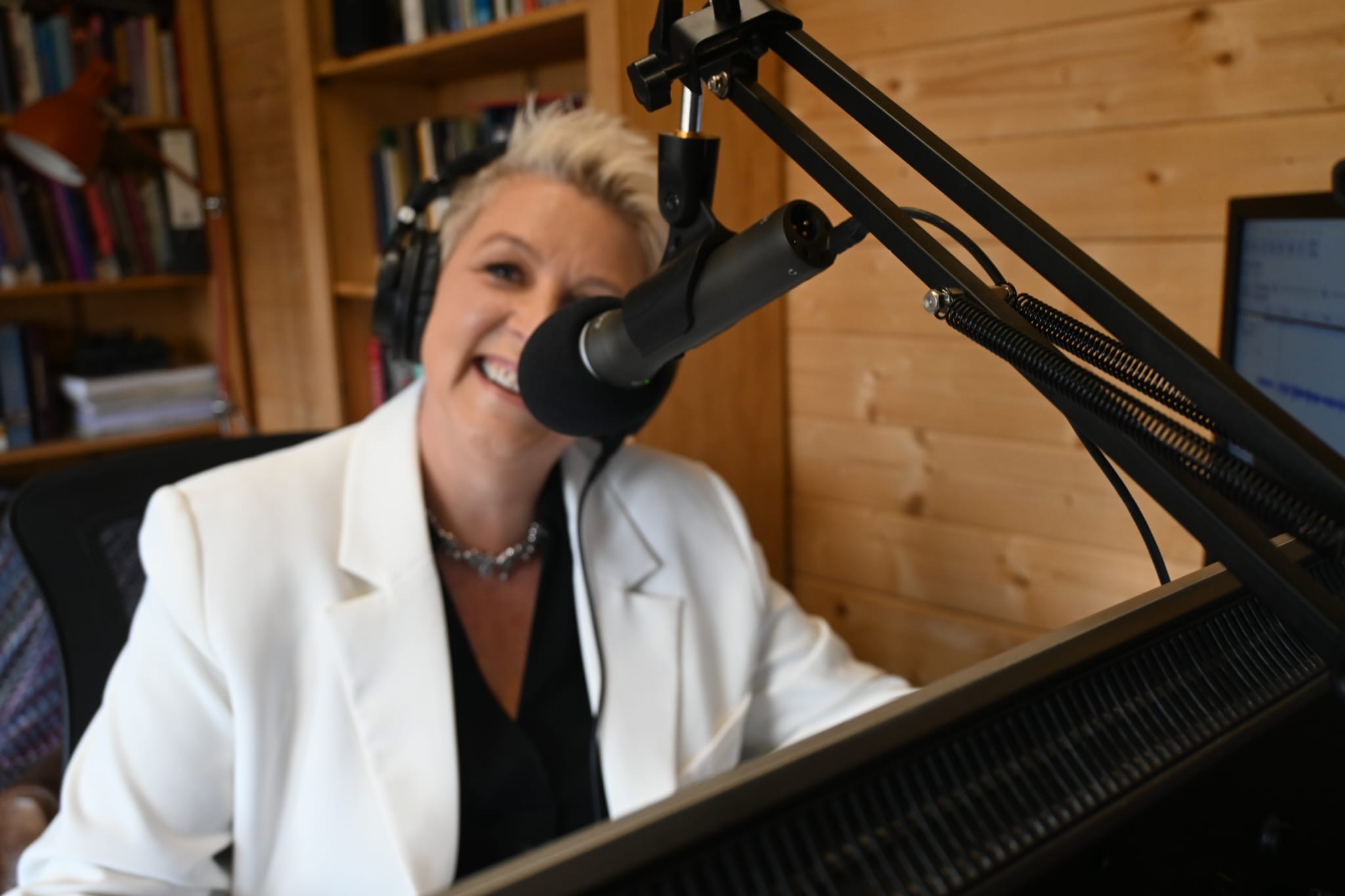
Legal academic / Author / Creator and Host of Criminal Justice in Action
A legal scholar specialising in criminal law and procedure, Candida spent two decades researching and teaching at the University of Nottingham. Her academic work focuses on how the criminal justice system operates in practice, particularly in rape and sexual assault cases, and those involving vulnerable witnesses. She has conducted extensive empirical research, including interviews with police officers and Crown Prosecutors about their decision-making, detailed analysis of case files, and first-hand observation of criminal trials in the Crown Courts.
Her research has been funded by bodies including the Nuffield Foundation and the Economic Social and Research Council, and has been published in leading peer-reviewed journals such as the Criminal Law Review, Oxford Journal of Legal Studies, International Journal of Evidence & Proof, and British Journal of Criminology.
In Rape on Trial, Candida draws on this research so we can see for ourselves how the criminal justice system really operates in the investigation and prosecution of rape and serious sexual offences. Not what we assume happens. Not what the conventional wisdom tells us happens. But what the evidence actually shows.
Every claim is grounded in data. Every episode is informed by rigorous academic inquiry.


