INSIDE A RAPE TRIAL: What really happens at court (3/3)
script for Rape on Trial/Ep 01: Tariq's Trial pt 1 (blog post 3/3)
Rape on Trial is a legal documentary podcast using real-life, fully anonymised cases to critically examine the investigation and prosecution of rape and serious sexual offences in the criminal justice system in England & Wales.
This blog reproduces the original written script for Episode 1 of the Rape on Trial podcast, which sees us in the public gallery of a Crown Court somewhere in England & Wales watching Tariq* stand trial on charges of rape and false imprisonment.
Topics covered in this episode: prosecuting counsel’s opening speech; special measures for vulnerable and intimidated witnesses under Youth Justice and Criminal Evidence Act 1999; ‘Achieving Best Evidence in Criminal Proceedings’; ABE video; complainant’s evidence-in-chief and cross-examination; admissibility; agreed evidence; agreed facts; evidence of the officer in the case/investigating officer; how evidence of a defendant’s police interview is adduced by the prosecution.
Keywords: criminal law; criminal evidence and procedure; criminal justice; trial procedure; courtroom advocacy; adversarial legal system; comparative law; common law legal system; legal case study; criminology; forensic linguistics; forensic psychology.
Open Educational Resource - Legal English Listening Practice - Legal English Comprehension Practice - Legal English Vocabulary - Legal English in Real Court Proceedings: Criminal Trial – Academic English - Language of Law - Legal Reasoning - Evidential Reasoning - Forensic Reasoning – Court Translator Practice
Content warning
This podcast explores the workings of the criminal justice system, including the investigation and prosecution of serious offences involving sexual and physical violence.
Episodes may contain detailed and sometimes graphic accounts drawn directly from case files, witness testimony, and court proceedings, including those involving adult and child victims.
Listener discretion is advised.
Agreed evidence: witness statements
The jury is given the standard direction, explaining that witnesses aren’t called when their evidence isn’t challenged. Instead, their statement is read to the court. ‘What you make of the evidence is up to you’, says the judge, ‘but you don’t have to decide whether what’s recorded is true or accurate. It’s agreed between the parties that it is.’
First, there’s a statement from Carole, Ruby’s mum.
In her statement, Carole explains that she’d spoken to Ruby on the day in question on a video call as she was away at the time. Ruby had said she was missing her mum, and was missing her more that day. That she’d had a bad day.
She’d been for a job, that it wasn’t a real job. Carole says she could see something was wrong, but she didn’t know what, and Ruby wasn’t telling her.
Mum’s asking questions about the interview, and Ruby’s told her that he was asking inappropriate questions. Mum asked directly if he’d touched her, and Ruby became distressed and said yes. Mum asked what he’d done, but Ruby didn’t answer.
She told Ruby to report it to the police the following day.
Ruby was very upset and said she had to go to college. I didn’t want her to go, Carole says, but she said she had to. I told her to relax for the evening but to report it the next day and to take her sister to support her.
They did, they went to the local police station after college the next day but it was closed. When Carole spoke to Ruby later that night, Ruby told her that she’d called the police, that she’d given a statement over the phone, and that the police were going to come and collect her clothes.
When Carole tried to push Ruby again around what had happened, Ruby didn’t want to talk about it. Carole says she only found out the full extent this morning—as in the morning Carole gave this statement to police. Carole said that Ruby wasn’t being her normal self and the police taking her clothes had made mum think there must be more to it. She’d then asked Ruby directly if the man had raped her. Ruby started to cry and said yes.
That’s the end of mum’s statement.
Next, there’s a statement from Hayley. Hayley states that, on the relevant date, she was in town with her friend Selena. They found out that Ruby was also in town, with another friend. So they all met up. Hayley’s known Ruby for a few years, she describes Ruby as very bubbly, energetic, always smiling and a really positive person to be around.
She states that Ruby wasn’t her usual self that day. She was very quiet. Selena was also worried about Ruby, hugging her and asking if she was okay. Hayley says as she and Ruby weren’t as close, she’d stepped back so Selena could speak to her.
She says they all went to the restaurant and ordered food. She says Ruby loves this particular restaurant and always has the same meal. She had that this day, but wasn’t really eating it, she was just picking at it.
The statement finishes with Hayley saying she especially remembers this day as Ruby wasn’t her usual self and it stood out. She says she hasn’t seen Ruby since and doesn’t know what might have happened, before they all met, to make Ruby appear so upset.
Next, a statement from Olivia.
Olivia is a friend of Selena’s. Selena had mentioned that she had the telephone number of a man who had lots of jobs going. His name was Tariq. Olivia messaged him to enquire about work and he replied asking for her name and email address. He mentioned having a number of jobs available but he never got back to her so she later blocked his number on her phone.
That’s it; end of statement.
The final statement to be read in is from Tia. Tia says that she and Ruby have been friends for a few years. That Ruby came to her house after she’d been for some training.
When Ruby came into Tia’s house that afternoon, she asked if she could use Tia’s shower. After she’d showered, Ruby wouldn’t say anything. I could clearly see she wasn’t herself and wasn’t comfortable talking about it, says Tia. Later on, Tia wanted to go into town.
Ruby didn’t want to do anything and, says Tia, I asked her why she was acting weird.
She then told me that he’d pinned her up against the wall and that every time she asked him to stop, he turned the music up louder and louder to muffle her. And he was making weird comments. Tia’s statement finishes saying Ruby hasn’t told me anything else and I’ve not asked because she uncomfortable talking about it.
That’s the end of the written statements.
Agreed facts
Mr Neil will now read some further agreed facts into evidence.
This, like the witness statements, is preceded by a direction from the judge that the prosecution and defence have agreed these facts. ‘In the same way that you can rely on the statements you’ve just heard as being true facts, you can do the same here’, she says, ‘but they have to be read into the record.’
The first agreed facts relate to WhatsApp. What it is, how it works, including the fact that users can see that others have visited their profile. The agreed facts state that the exchanges between the defendant and complainant, including comments on photos, have been exhibited. The facts also explain how messages can, and when they cannot, be deleted.
Another agreed fact is that, following his arrest, Tariq’s phone was inspected and was the subject of questioning during when he was interviewed under caution. Messages prior to the date of Ruby’s interview weren’t visible on Tariq’s phone. He had deleted all the messages between him and the complainant up to and including that day.
The agreed facts list the exhibited evidence: the CCTV footage from the bus, from the clothing store, and from the pharmacy, all of which, it is confirmed, is Ruby, the 999 call and the original job advert.
The final fact is that Tariq was arrested at his home address, the day after Ruby’s report.
Mr Neil now calls DC Elliot, the officer in the case as his next, and it turns out, final witness.
It’s 3.15 pm.
The Investigating Officer’s evidence-in-chief
Detective Constable Elliot enters the court from the main entrance at the rear of the room. Suited and booted, she strides confidently to the witness stand. She’s sworn in and Mr Neil gets straight to business.
There’s the usual preliminaries: name, rank, collar number, the station she’s based at; the unit she works in.
DC Elliot confirms she’s the officer in the case and what this means: that she’s responsible for the overall management of the investigation, collecting evidence and conducting further enquiries, all in pursuit of a charging decision from the Crown Prosecution Service.
She confirms that there are codes of conduct governing her investigations, and that she is under a duty pursue all reasonable lines of enquiry, whether they point towards or away from a particular offence having been committed.
And so we move to the first key topic of the prosecution’s questioning of DC Elliot.
She’s made a number of enquiries, including securing CCTV footage from the cash point, opposite Tariq’s office, when he withdrew the cash he subsequently gave to Ruby. That footage was provided by the bank in the form of a link attached to an email.
Elliot testifies that, yes, she did view the footage. It showed Tariq and Ruby together.
‘I could see the defendant and the victim approaching the ATM together’, she says. ‘The defendant was slightly ahead of the victim when he approached and used the ATM. He's seen to operate it and turned to her with what I suspect to be cash, then they walk away.’
‘How long did the footage last?’ asks Mr Neil.
‘No longer than 45 seconds.’
‘Can you remember the demeanour of the defendant and the complainant?’ asks Mr Neil.
‘There was nothing that stood out. They approached casually. She doesn't appear to be under any duress.’
This CCTV footage, however, is no longer available.
Elliot explains that police computers require special licences to download external material—not to view it, to download it. By the time she’d found a colleague with the appropriate licence, the link to the footage had expired.
Despite attempts to retrieve it, the bank couldn't resend the link. This footage, then, is lost.
The bulk of DC Elliot's evidence involves reading the transcript of Tariq's police interview; what he said when he was interviewed under caution, following his arrest.
Tariq didn’t go ‘no comment’ like a lot of suspects do. Instead, he provided a detailed account of the events of that day.
Now, from what I understand, there is no legal prohibition on playing a suspect’s video interview with police in court, but as a matter of convention, they aren’t played in Crown Court trials in England & Wales.
Instead, the transcript, or at least pertinent sections of it, is read aloud.
It’s a bit like those excruciating English Literature classes in secondary school when the text you were studying was a play and the teacher dished out the different parts to your students as you read a particular scene together as a class.
That’s what happens at trial, and it’s what’s happening here.
DC Elliot takes the role of Tariq and Mr Neil reads the interviewing officers’ questions.
Reading that ‘script’ now, the transcript of the interview, DC Elliot begins by confirming that Tariq’s under caution, he’s got an interpreter with him in the interview, and a solicitor. She confirms, for the purposes of the tape, that there’s been disclosure to the solicitor prior to the interview, the solicitor was given all the essential details sufficient to take instruction and be properly prepared for the interview.
Although they allude to the same essential facts, Tariq’s account is very different to Ruby’s.
I’ll cover the main issues in his account here, but I’m going to be summarising what we hear of Tariq’s account, rather than trying to re-enact a re-enactment.
He’s in the process of setting up his own business, he says, he needs staff, so he’d advertised on a website. Ruby has contacted him about a secretarial job. He says they talked about that being a voluntary role and that she’d agreed to that; to do voluntary work.
Then, to the day of the rape. Ruby’s attended his office, they’ve talked about the role and her training, then he’s given her some tasks to do, research and so on. He says he needed to go to the post office at some point and left Ruby in the office on her own.
When he got back, he says, he and Ruby were chatting, and she showed him holiday photos including one of herself in a bikini, which says Tariq, he found surprising. He claims she performed gymnastics on a mat he laid out, that she danced with him to music she selected on his phone, and that, as they danced, she embraced him tightly.
‘She was the one who embraced me,’ Tariq said. ‘She showed me how to do it. How to perform slow dancing. This is when I thought it was okay and I thought we are more than friends or colleagues.’
He asked her if she’d go on holiday with him and she said yes; she said she’d have time in October, when college had finished.
He asked if he could kiss her and she’d nodded her head in agreement.
Tariq claims he explicitly asked for Ruby’s consent at every stage of their encounter: he’d asked if he could touch her hair, if he could kiss her, if he could touch her: ‘I want to get her consent every time’, he told police, ‘I don’t want to do anything without consent.’
And, he says, at some point during the encounter, but prior to sex, his phone had rung. ‘If Ruby wasn’t consenting’, Tariq tells police, ‘she could have made a dash for it then.’
Moreover, on Tariq’s account, Ruby wasn’t merely consenting to sexual activity, she was the initiator. ‘I thought she gave me the green light to do so when she showed me the photo in the bikini and especially after when she agreed to dance with me and all that. She also started all of this when she embraced me with her arms. She held me. She was the one who initiated everything’, he said. It was Ruby who pulled her trousers down— that, yes, he’d pulled at them lightly but, he tells police ‘I said, it doesn't feel right and she did it herself, she pulled it down further."
Tariq says that penetration occurred, but it was minimal and brief.
‘As soon as I penetrated her, she asked me to stop and I did,’ he says. ‘I have not penetrated her fully when she's asked me to stop but I ejaculated anyway. I ejaculated on her rather than in her.’
He says Ruby was ‘in a very good mood before and after we’ve had sex. Her mood changed all of a sudden. I asked her what might be the reason. Not much was being said, not much was said about why she was not being well. She just said she’d got appointments. And so before she left, I said I need to pay you for the sex that we had together.’
‘What was that, sorry?’ the interviewing officer asks.
‘I said to her I need to pay you for the sex that we had together’, says Tariq. ‘I didn’t mention the word sex per se. I said I need to pay you for what we just did together, just now, and I need to go to the bank and to withdraw the cash to give it to you. I didn’t have the cash.’
Tariq says Ruby agreed to that ‘and she had a few more words with me on the way to the bank. So yes we went together to the cash machine. I’m sure there are cameras to prove what I’m saying. At the cash machine, I asked her how much, ten or twenty, and she said twenty would be fine. I withdrew £20 and gave it to her.’
Later on in the interview, when he’s asked again about giving Ruby money, he says it was his idea, his suggestion, because, from the way she spoke to him after they’d had sex, he felt she was asking him for money.
He’s asked if he uses prostitutes? If he pays for sex, to which Tariq responds: ‘No, I have germophobia.’
‘Pardon?’ says the officer.
‘I fear disease’, explains Tariq.
‘You fear disease but you’ve met a girl and, within one hour, you’re having consensual sex with her, unprotected?’ the officer asks.
Yes, says Tariq, he fears disease from prostitutes on the street.
With the suspect interview now covered, Mr Neil asks DC Elliot about cameras in Tariq’s office and she confirms that police found a Wi-Fi camera in Tariq's office, but it was either deactivated or couldn't be accessed for footage.
With no more questions either from Mr Neil or the judge, Miss Roberts begins her cross examination.
Cross-examination of DC Elliot
There’s only really one thing Miss Roberts is interested in and that’s the missing CCTV footage from the bank’s cash machine.
She establishes a detailed timeline around this: when the footage was requested—two days after the incident. That the link was provided by the bank about three weeks later. That it was another week before someone with the necessary download permissions was available, and that by this time the link had expired.
‘So, what you told the jury about your recollection of what was on the footage is what you can remember from that viewing?’ asks Miss Roberts.
‘Correct,’ confirms DC Elliot.
‘How many times did you view it?’
‘Maybe three or four times.’
Miss Roberts now presses for details about what the officer saw: ‘The camera that shows the defendant and the complainant at the ATM, is it a camera that's in the machine or is it above it?’
‘It appeared to be external,’ says the officer.
‘You could make out who they were?’
‘Yes.’
‘And from what you could see—you've said nothing stood out, it was uneventful?’
‘That's correct.’
‘What you saw was the defendant approach and use the cash machine?’
‘Correct.’
‘And then hand some cash—did you see him hand over something to the complainant?’
‘Yes.’
‘And did she accept it?’
‘Yes.’
That’s pretty much it from Miss Roberts, except for one final question, presented almost as an afterthought: ‘In relation to this country, France and Spain, there is nothing recorded against him?’
‘Correct,’ says the officer.
‘That’s all I have for you officer, thank you.’
It’s ten past four. The judge asks Mr Neil if there is other material that he wanted to play now.
There is: it’s videos of CCTV footage which, a rather sheepish Mr Neil says, ‘I refer to with some trepidation’.
‘Experience so far’, says the judge, ‘has been that checks need to be made before myself and the jury sit down to watch it and then find out there’s a problem.’
She gives prosecuting counsel the remainder of the court day to do just that.
Court adjourns until tomorrow morning.
Outro
Join me in episode two, when we’ll be back in Court 1 for the remainder of Tariq’s trial for rape and false imprisonment.
If you’ve been affected by any of the issues raised in this episode, please visit our website criminaljusticeinaction.com for information about support.
Criminal Justice in Action is a Scrutiny Media production.
Researched, written, and presented by Dr Candida Saunders.
Edited and produced by Candida Saunders and Gary Saunders.
Music: Hopeless Waltz by Alena Smirnova
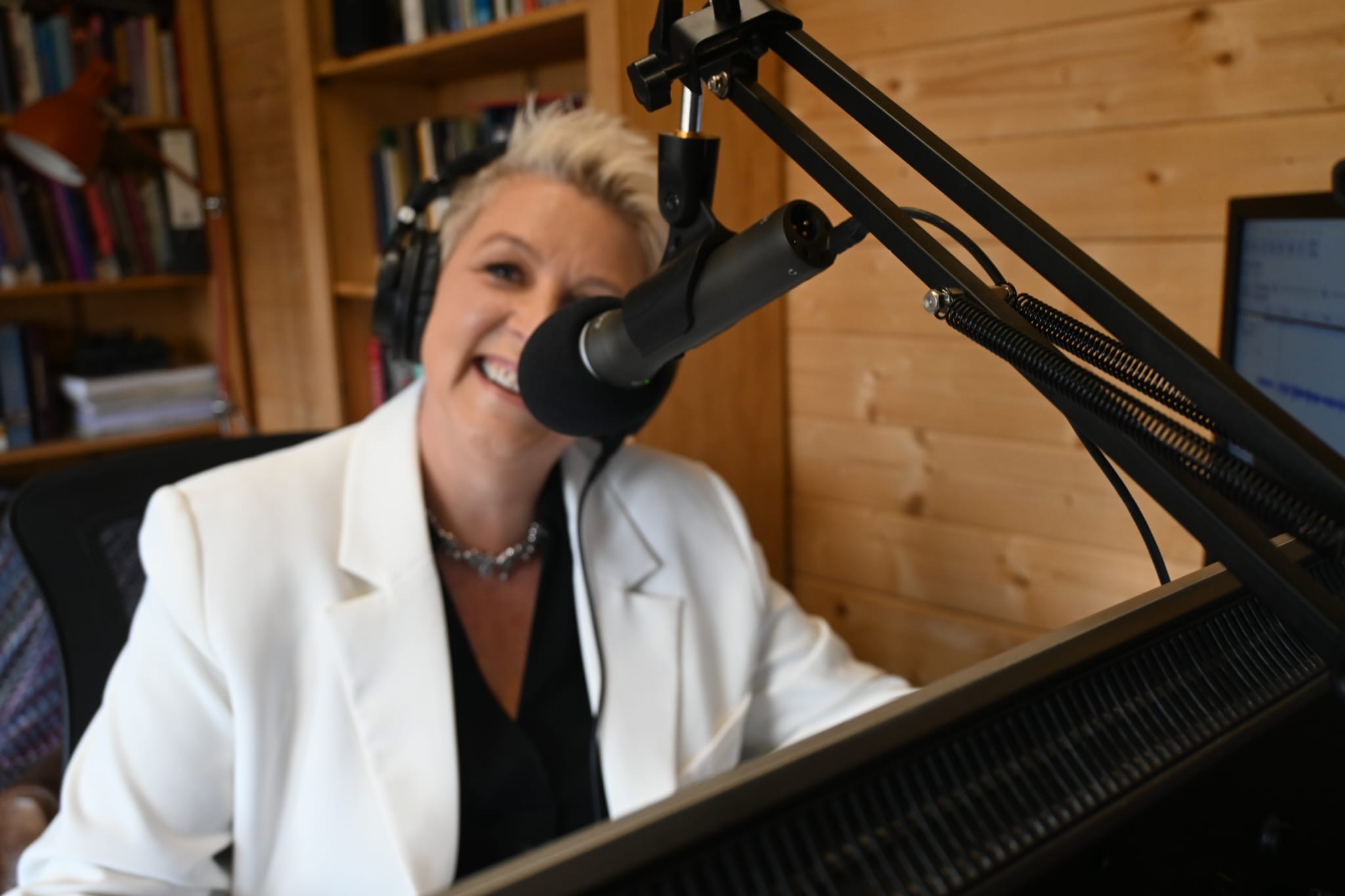
Legal academic / Author / Creator and Host of Criminal Justice in Action
A legal scholar specialising in criminal law and procedure, Candida spent two decades researching and teaching at the University of Nottingham. Her academic work focuses on how the criminal justice system operates in practice, particularly in rape and sexual assault cases, and those involving vulnerable witnesses. She has conducted extensive empirical research, including interviews with police officers and Crown Prosecutors about their decision-making, detailed analysis of case files, and first-hand observation of criminal trials in the Crown Courts.
Her research has been funded by bodies including the Nuffield Foundation and the Economic Social and Research Council, and has been published in leading peer-reviewed journals such as the Criminal Law Review, Oxford Journal of Legal Studies, International Journal of Evidence & Proof, and British Journal of Criminology.
In Rape on Trial, Candida draws on this research so we can see for ourselves how the criminal justice system really operates in the investigation and prosecution of rape and serious sexual offences. Not what we assume happens. Not what the conventional wisdom tells us happens. But what the evidence actually shows.
Every claim is grounded in data. Every episode is informed by rigorous academic inquiry.


