INSIDE A RAPE TRIAL: What really happens at court (part 1/3)
script from Rape on Trial/
Rape on Trial is a legal documentary podcast using real-life, fully anonymised cases to critically examine the investigation and prosecution of rape and serious sexual offences in the criminal justice system in England & Wales.
Topics covered in this episode: prosecuting counsel’s opening speech; special measures for vulnerable and intimidated witnesses under Youth Justice and Criminal Evidence Act 1999; ‘Achieving Best Evidence in Criminal Proceedings’; ABE video; complainant’s evidence-in-chief and cross-examination; admissibility; agreed evidence; agreed facts; evidence of the officer in the case/investigating officer; how evidence of a defendant’s police interview is adduced by the prosecution.
Keywords: criminal law; criminal evidence and procedure; criminal justice; trial procedure; courtroom advocacy; adversarial legal system; comparative law; common law legal system; legal case study; criminology; forensic linguistics; forensic psychology.
Open Educational Resource - Legal English Listening Practice - Legal English Comprehension Practice - Legal English Vocabulary - Legal English in Real Court Proceedings: Criminal Trial – Academic English - Language of Law - Legal Reasoning - Evidential Reasoning - Forensic Reasoning – Court Translator Practice
Content Warning
This podcast explores the workings of the criminal justice system, including the investigation and prosecution of serious offences involving sexual and physical violence.
Episodes may contain detailed and sometimes graphic accounts drawn directly from case files, witness testimony, and court proceedings, including those involving adult and child victims.
Listener discretion is advised.
Host introduction
Criminal Justice in Action examines the criminal justice system in England and Wales in practice—how the system works, why it works the way it does, and when and why it doesn’t.
Each season presents a comprehensive and thought-provoking deep dive into a critical issue in the criminal justice system today.
In Season One, we tackle one of the most contentious issues—the investigation and prosecution of rape and serious sexual offences, or RASSO cases as they’re increasingly referred to.
The criminal justice system’s handling of RASSO cases, and rape in particular, is a topic that triggers a significant amount of criticism, from academics, from activists, from law reformers, the media, the public, and victims.
Because it’s so emotive, because it’s so contested, criticised, and politicised, it’s a subject where law, facts, and reasoned debate can struggle to cut through the noise. And that matters, because it paves the way for myths and misconceptions to prevail.
This season isn’t about peddling a favoured theory or ideology. It’s not about pushing a particular reform agenda. It’s about taking a comprehensive, systematic, and measured look at how the criminal justice system actually works in these cases—and when it doesn’t.
Welcome to Criminal Justice in Action, season one: Rape on Trial. This is Episode One.
Setting the scene: The jury is about to return its verdict
It’s about 4.25 pm on a Friday afternoon and I’m sitting in the public gallery of Court 1 in a Crown Court somewhere in England & Wales. The courtroom is almost empty and it’s eerily quiet. The judge rose around 3.50 pm—not long after she’d put the case into the charge of the jury and sent them out to deliberate on their verdict. So her Honour’s not here. Neither is the jury. The Court Clerk’s not here either. He was clicking away on his computer for a while after the judge left, but then he swept out of court with a piece of paper in his hand.
Mr Neil, prosecuting counsel, and Miss Roberts, the defence barrister, they’re here; both scrolling through their laptops. Miss Roberts is apparently catching up with her emails. Mr Neil is slowly scrolling through what looks like a witness statement. Presumably, he’s using this time to prepare for his next trial. Tariq, the defendant is also here. He’s sitting in the dock at the back of the courtroom, along with his interpreter and a custody officer. And then there’s me.
I wouldn’t normally be here.
I’m a legal academic, I’ve been teaching and researching criminal law, criminal evidence and procedure, criminal justice, and, well, everything with ‘criminal’ in it really, since 2008. Earlier, if you include my PhD. But, when I’m watching Tariq’s trial, I’d been on research leave for a good few months, traipsing up and down the UK and, occasionally, beyond, watching criminal trials as part of a research project.
If there’s one thing I know—or thought I knew—about jury trials, especially in serious cases, it’s that, if the jury starts its deliberations late on Friday afternoon, you’re not getting a verdict until Monday at best. Usually, then, having been away from home all week, often longer, I take a late retiring jury as my cue to head off home to avoid the Friday night rush and get back a little earlier than expected.
But I didn’t do that today. I lingered.
I don’t know why I lingered, but I did. I stayed put. I’m still here, sitting on a crazy uncomfortable seat in Court 1’s public gallery, killing time by responding to emails and tidying up my trial notes.
Suddenly, there’s a flurry of activity.
The Clerk appears, there’s an usher, and urgent whispering about the judge being on her way. I look up.
Is it a jury question? I wonder.
No. More whispering—something, something verdict. I definitely hear ‘verdict’. More than once. The jury’s coming back with a verdict.
No, that's not how this works, I think, as I switch off my mobile phone and pick up my notepad and pen. Juries don’t come back with a verdict after, what, 40 minutes? They’ve barely had time to elect a foreperson, let alone reach a unanimous verdict. And this isn’t any old criminal trial. It’s a rape trial.
Moments later, the judge is in her seat, and the jury is filing back into court. Their faces aren’t giving anything away as they take their seats for the last time.
I find myself suddenly dry mouthed with what feels more like a murmuration of starlings than butterflies in my tummy. I’m genuinely nervous.
I’m not usually nervous. I’m not usually anything. I’m here as an observer. A neutral, impartial and as objective as I can be observer. I’m here to watch proceedings, specifically, how counsel conduct and how trial judges manage the cross-examination of witnesses, especially vulnerable and or intimidated witnesses.
So it’s not that I’m not interested in trial verdicts. It’s that I’m here to observe the conduct of the trial itself, and that part’s done now.
But here I am. Late Friday afternoon, sitting in court, waiting for the jury to return with its verdicts, heart pounding, suddenly overwhelmed by this sense of dread. This horrible, horrible feeling that the jury’s about to get this wrong.
Back to the beginning: Day 1 of trial
But I'm getting ahead of myself. To understand my uncharacteristic nerves, my rush of concern that this is all about to go horribly wrong, you need some context. So let me take you back to the start of this trial, to Tuesday morning, when we’re walking into this particular Crown Court for the first time.
We’re here to observe a trial that’s listed to start in court 1 today, at 10 am.
All we know right now is that it’s a rape trial, it’s been listed for 3 to four days, and it involves a defendant I’m going to call Tariq.
Tariq isn’t his real name. In fact, none of the names you’re going to hear are the individuals’ real names.
Because of the research protocols and legal and ethical obligations governing the project I’m involved in, and, of course, the fact that the law gives complainants in rape cases lifelong anonymity, I’m anonymising everyone and everywhere in the retelling of this trial. But this is a real trial. Aside from names and places, everything you hear is accurate. It’s edited down for time, obviously, but it’s a comprehensive retelling of real events in real criminal proceedings.
So, here we are, in the public gallery of court 1 in a Crown Court somewhere in England and Wales. It’s a little before 10 am. Phones off, notepad on lap, pen in hand.
Prosecuting counsel and defence counsel are already in court. Tariq, the defendant, is in the dock at the back of the courtroom. He’s accompanied by an interpreter and flanked by a custody officer.
The Court Clerk enters the court from a small door behind the judge’s bench.
He’s followed by the judge who looks to the court as she takes her seat. Counsel nod slightly and, once the judge is settled, she motions for us to sit.
As is the case on the first day of any trial, there are last minute legal and procedural matters that need to be dealt with before the jury is empanelled and the main hearing—the trial proper, as it were—gets underway.
They’re being dealt with now.
Outstanding pre-trial procedural matters
The prosecutor, Mr Neil, is telling the judge that there have been some developments in terms of the number of witnesses being called. Instead of the 3-4 days originally listed, the trial’s more likely to take two days now, possibly going into a third.
There’s a discussion around what her Honour calls ‘the batting order’, with Mr Neil telling the judge which witnesses are being called in what order. ‘The plan’, he says, ‘is that the complainant’s evidence’—her evidence-in-chief, cross-examination and any re-examination—'will be concluded today’.
There’s a potential problem with a prosecution witness; a friend of the complainant’s who isn’t currently at court and is apparently refusing to come. The judge says this must be dealt with today.
There’s an outstanding disclosure issue: it’s evidence of messages between the complainant and the defendant via WhatsApp that hasn’t previously been disclosed to the defence and needs to be served. This must be done today, says the judge.
There’s a problem with some relevant CCTV footage which is no longer available. The officer in the case viewed it previously, explains Mr Neil, and can testify to its content.
Miss Roberts, Tariq’s defence barrister, immediately jumps in saying that she hasn’t seen or heard mention of this footage until now.
While Mr Neil’s plan may be for the complainant’s evidence to be finished today, says the judge, ‘there is no conceivable way that cross-examination can go ahead until the defence has been properly served with all the as yet undisclosed evidence, and has taken detailed instructions from the defendant’.
Despite the outstanding issues, however, the judge wants to press ahead and empanel the jury with a view to trial starting this afternoon. She doesn’t want to add to the delays. ‘Miss Roberts’ cross examination of the complainant can proceed tomorrow’, her Honour says.
With that, court rises so that Mr Neil and Miss Roberts can deal with the various matters.
Judge’s opening directions (Judge’s Homilies)
After lunch, jury selection goes quickly and smoothly. By two thirty, twelve jurors have been selected and sworn in.
Once the jurors are all settled into their seats, her Honour addresses them.
She explains the separate roles of the judge and jury, that they will be judging the facts and she’s dealing with matters of law. She tells them that they’re trying a rape case, that they must put aside any assumptions or preconceptions about rape they may have and assess the case on the evidence, dispassionately. Don’t talk to anyone about the trial, she tells them, don’t do your own research; let me know about any intimidation.
She explains that they’re going to get different types of evidence during the trial—video evidence, statements read in—and it’s all to be assessed the same way. She tells the jury they’ve each got a paper and pencil but she’ll be summarising the evidence at the end; they don’t need to worry about taking extensive notes.
It’s standard start of trial fare and takes about ten minutes.
Mr Neil then takes to his feet and opens the prosecution’s case.
Prosecuting counsel’s opening speech
Mr Neil’s the quintessential ‘bit of a toff’ barrister. Rhetorically, he’s a bit flowery in places, but he’s neither pompous nor arrogant.
Quite the opposite.
He’s quietly dignified, speaks with a measured authority and a kindly and compassionate tone. Affable and amiable.
He begins by introducing himself and tells the jury he’s prosecuting this case on behalf of the Crown. He also introduces Miss Roberts. She’s acting for the defendant, Tariq.
Mr Neil then points to a large, wall mounted screen on the opposite side of the court to the jury. On it, there’s a still image: a picture of a young black woman, sitting on a bus.
She looks small: not small like a child. Small as in, curling in on herself, like an autumn leaf.
And she is clearly distressed.
There’s another woman in the picture too. She’s standing in front of the seated, patently anguished passenger. While the standing woman’s uniform says ‘ticket inspector’, her stance says, ‘concerned aunty’.
It’s a powerful image.
After he’s given the jury a moment to take that picture in, Mr Neil tells them it’s ‘a still taken from CCTV footage from a bus showing the clearly traumatised complainant, young Ruby, 18 at the time, after she had left that gentleman’s business premises after an encounter with him which is the subject of the indictment you have in your jury bundle’.
As I say, it’s a compelling image. And it stays up on that screen for the duration of Mr Neil’s opening speech.
He directs the jury to the indictment, the document setting out the two charges for which Tariq is now on trial. one count of rape, and a second count of false imprisonment.
Mr Neil then gives the jury an overview of the prosecution’s case. He tells them that, ‘on the day in question, Ruby, a teenager, was, as far as she was concerned, going for a perfectly conventional job interview. With the benefit of hindsight, the wisdom of hindsight’, he says, ‘when Ruby looked back at the setting up of that interview, she had reservations about some questionable and’, he says, ‘arguably unprofessional acts on Tariq’s part’.
Ruby had seen a job advertisement online for care workers. The advert contained a mobile telephone number, which she’d contacted. It was Tariq’s number.
There was a photo of Ruby in a bikini on her WhatsApp status. ‘Nothing alluring or suggestive about it,’ he says emphatically, ‘simply a photograph of her reflection in a mirror while wearing a swimsuit’.
Tariq had responded directly to that photo rather than in the main conversation thread, posting ‘Hi, how are you?’
‘Ruby didn’t think this was appropriate, but’, says Mr Neil, ‘she’s pursuing a job opportunity, so she sends him her CV when requested and so on. But she conducts all her exchanges with Tariq in the body of the conversation thread. An interview is arranged for the following week’.
Although the advertised job was for care workers, Tariq was now looking for a secretary. Having looked at her CV, Tariq said Ruby had no relevant secretarial experience.
‘And what better way to remedy that than to offer some training?’ says Mr Neil.
Ruby agreed to undergo secretarial training from 10am to 5pm on the day of the interview. Tariq told her she would get a certificate at the end.
When Tariq offered to pick Ruby up and give her a lift on the morning of her interview slash training, Ruby declined. She made her own way to the office.
‘Up to this point’, says Mr Neil, ‘Ruby was under the impression that Tariq’s company was substantial. And, when she got to the relevant premises, she was reassured by’ what Mr Neil now describes as ‘the building’s impressive façade. Once inside, however, Tariq’s small, cramped office filled with oddments of furniture was somewhat underwhelming’.
The training, too, was not what she’d expected. She was given ‘pointless tasks to complete, none of which seemed to have much to do with secretarial skills’.
‘The Crown suggests that all of this was essentially a pretence’, Mr Neil tells the jury. ‘the purpose of which was simply to draw out Ruby’s stay’.
‘Tariq asked personal sometimes intimate questions. He mentioned the bikini profile photo, and joked that she hadn’t invited him to her account as a friend or contact. When he learned she’d studied dance, Tariq said she should demonstrate. He got a prayer mat from the cupboard, laid it on the office floor, made several entreaties for her to dance for him. All politely declined’.
He’d asked her if she was single.
‘At this point’, says Mr Neil, ‘Tariq told Ruby he needed to pop out to the post office. He was gone, leaving Ruby alone in the office, for around ten minutes’.
‘When he returned’, says Mr Neil, ‘personal matters were pursued by him again, and again, not appropriately. Tariq showed Ruby photos of his girlfriend, his holiday snaps; all designed’, says the prosecutor, ‘to make Ruby more likely to reciprocate his openness’.
Mr Neil now sets out a basic account of the alleged assault.
How Tariq asked Ruby to look for some papers in a box, how he’d approached her while she did so, told her that the job was hers, albeit that he couldn’t pay her and she'd have to work as an unpaid volunteer, an intern, as it were. Once again, Tariq asked Ruby to dance for him and started to play music on his phone.
‘Now,’ says Mr Neil ‘the whole episode began to take a jolly sinister turn’.
The prosecutor describes Tariq advancing on Ruby, bearing down on her, pinning her to the wall, kissing her, ‘pleading for her to give him just one kiss, with Ruby making it abundantly plain that this was not welcome’. That she’s then pushed down to the ground and raped. ‘As Ruby struggled and screamed’, he tells the jury, ‘Tariq simply reached for his phone and turned up the volume on the music’.
When it was over, Ruby grabbed up her belongings and went to leave. Tariq, however, told her she couldn’t leave; she hadn’t completed her training. When she went for the door anyway, Tariq forcibly blocked her exit until Ruby had promised not to tell her friends.
‘And then, members of the jury’, says Mr Neil, ‘in perhaps, the most devastating afterthought but one full of implied meaning, you might think, he told her he hadn’t paid her for today and that if she came to a cashpoint, he would give her the money that was due to her and let her go. And this she did, automaton like. And he then left her to get that bus that you see up on the screen. She traumatised, weeping, her trousers soiled and wet with his semen’.
He tells the jury that ‘what Ruby did after this encounter, where she went and the reports she made, will be revealed in evidence in due course. But’, he says, ‘as the jury will have gathered, a complaint was made to police leading to Tariq’s arrest and interview’.
He takes the jury back to the indictment.
‘In respect to count 1, the rape count’, Mr Neil says, ‘the prosecution case is that there is absolutely no prospect of you finding that Ruby consented to her violation. Likewise, we say that there is no conceivable argument that would cause him to believe that she had done so, reasonably or otherwise’.
‘On count 2’, says Mr Neil, ‘the prosecution’s case is that, in detaining her, post-rape, Tariq held Ruby against her will inside that claustrophobic room. He falsely imprisoned her’.
‘In his police interview’, says Mr Neil, ‘Tariq set out his answer to the indictment. That answer centres upon the unbridled consent of Ruby’, he says, ‘to every aspect of the sexual encounter that they'd enjoyed, as he represented it to officers. Indeed, not only did she consent, she had, by his lights, initiated it’.
‘According to Tariq, Mr Neil continues, ‘Ruby showed him her WhatsApp profile picture when he returned from the post office. She danced for him on his prayer mat. She put the music on his phone. Sexual intercourse, according to the defendant, was a natural consequence of all this precursor activity; she eagerly cooperating’.
‘As for the false imprisonment, on Tariq’s account, Ruby had begun to feel unwell. She also had another appointment. There was no question of him resisting Ruby’s leaving. In fact, according to Tariq, he’d offered to reimburse her travel expenses and so took her to the cashpoint and gave her £20 for her trouble’.
‘So that, members of the jury’, Mr Neil concludes, ‘is the way the land lies in this case’.
There’s a slight pause before he continues:
‘Now, the Crown bring these complaints against Tariq’, he says slowly and seriously, ‘and you come to these proceedings presuming that, in respect of both of those counts, that the Crown is entirely wrong about this defendant. And that presumption of his innocence, as you are very well aware, endures unless and until the Crown has satisfied you so that you are sure that you can safely discard it’.
With the gravity of proceedings thoroughly underscored, Mr Neil tells the jury they're about to see Ruby's video evidence, an interview with police which serves as her evidence-in-chief.
It’s seventeen minutes past three and the prosecution’s evidential case is about to begin.
Delay and an early adjournment
It’s now twenty past three and, although Ruby’s prerecorded video is up on the court’s screen, it’s been paused. There’s a problem with the audio. It will only play through Mr Neil’s laptop speakers. That, of course, is far too quiet for the jury to hear.
The judge asks if this was checked prior to being played and Mr Neil has to admit that, no, it wasn’t.
The clerk, Mr Neil and Miss Roberts are now all furiously clicking computer keys on the prosecutor’s laptop and on the court’s computer system, but nobody can work out what’s gone wrong.
The jury are asked to leave the courtroom while the problem is sorted out: ‘This is a crucial piece of evidence’, the judge tells them, ‘and poor sound is not acceptable’.
‘If the problem can’t be resolved by quarter to four’, she says, ‘then the evidence will be played tomorrow’.
The problem isn’t resolved by quarter to four and the jury is sent home.
Once they’ve gone, the judge’s displeasure with the lack of preparation on Mr Neil’s part is made very clear.
Court rises. Back tomorrow morning.
Special measures
While we’ve got a minute, then, given that we’re leaving court early today—and, as the season goes on, you’re going to notice that we leave court early quite a lot—but, seeing as we’re leaving early today, let’s have a quick explainer.
Because you might be wondering about why the jury’s about to watch a video of Ruby talking to police, rather than hearing her testifying live in court for all to see; like we see in the movies and on TV dramas.
In England & Wales, the Youth Justice and Criminal Evidence Act 1999 provides for a range of what are called special measures. These measures—special measures—are designed to assist eligible witnesses give their, quote, ‘best evidence’ and alleviate some of the fear and stress associated with attending court and giving evidence.
Special measures are not available to all witnesses; only to those eligible under the Act. Specifically, vulnerable witnesses as set out in s16 of the Act. And intimidated witnesses, as set out in s17.
Complainants in rape and serious sex offence cases are presumptively categorised as intimidated witness and therefore eligible for special measures under s17(4). The witness can tell the court they don’t want to be subject to special measures, or that they don’t want to receive a particular special measure—and it does happen; you’ll see that happen occasionally as the season progresses. But the law’s starting point is that complainants in RASSO cases are eligible for, and will be assisted by, the use of special measures.
It’s also worth noting that, although they’re discrete categories in the Act, ‘vulnerable’ and ‘intimidated’ are not mutually exclusive. A witness may be both vulnerable under s16 and intimidated under s17.
And that matters because there are a couple of special measures that are available to vulnerable which are not available to intimidated witnesses—because, frankly, intimidated witnesses wouldn’t need them.
Let’s start, then, with the special measures that are available to all eligible witnesses, be they vulnerable or intimidated.
We’ll cover them in the order they’re dealt with in the Youth Justice and Criminal Evidence Act.
Section 23. This provides for the witness to give their evidence live in court with the use of screens. Not computer screens. A big screen or screens, and sometimes, a heavy curtain on a portable rail that shields the witness from the public, and importantly, the defendant’s view.
Section 24 provides for eligible witnesses to give evidence (live) to the court via a video link--in practical terms, this looks like a Zoom call or a Teams video call. You’ll see the witness, live, on the court’s large screen or monitors, with the witness sitting in front of a webcam or other camera located somewhere other than the courtroom she, or he, is being beamed into.
That witness might be in another room in the same court building. But, equally, they might be in a different location entirely. Maybe another court building in another part of the country, or even, sometimes, in another jurisdiction altogether.
Moving on, then, to section 25, which allows for the witness’s evidence to be given in private. What does that mean? Does that mean the evidence is given somewhere other than in court? Like in judge’s chambers or something?
No.
The evidence is given and heard in court—whether that’s in the form of live in court testimony, via live video link, or a pre-recorded video, which we’ll get to in a moment. So ‘private’ here doesn’t mean the evidence is received somewhere other than court. It means that while this witness’s evidence is being heard, the court, which is holding a public trial in a courtroom that is open to the public in line with principles of open justice—the notion, well, firm belief that justice must not just be done but must be seen to be done—well, section 25 makes that public court, momentarily at least, less public.
Under its provisions, the court may direct that persons of any description be excluded while the eligible witness’s evidence is being heard. Persons of any description, except, the accused—ie the defendant or defendants—the legal representatives acting in the proceedings, and interpreters or other person appointed to assist the witness—an obvious example here would be an Independent Sexual Violence Advisor, or ISVA.
It’s concerned, largely with excluding the public. And while the press can also be excluded, any such direction must expressly allow for a nominated representative of the press to be present.
Now, in my experience, I haven’t seen this special measure used in England & Wales. That doesn’t mean it isn’t used. It means I haven’t seen it used. And I don’t believe it is used with any great frequency.
First, because the judiciary here is pretty big on the principle of open justice, and rightly so.
But, second, because the use of section 25 is limited by s25 (4). It’s only available in certain types of cases—for our purposes, rape and serious sexual offences are covered. And it’s only available in certain circumstances. Namely, where it appears to the court that there are reasonable grounds for believing that any person other than the accused has sought, or will seek, to intimidate the witness in connection with testifying in the proceedings.
Next, in terms of special measures available to all eligible witnesses, is the removal of wigs and gowns under section 26. This is exactly what it says it is: counsel and the judge may be wigless and gownless while the witness testifies. I have seen this. But I’ve only seen it in relation to vulnerable witnesses, usually, typically, children.
Then we’ve got s27, which is the special measure we’re going to encounter the most frequently, and it’s the one that’s relevant to us right now. Section 27 provides for a video recording of the witness’s evidence to be played to the court as evidence-in-chief.
Instead of calling that witness to give their evidence in chief, their account of what happened, live in court and in response to questions from the prosecution, that evidence is videoed in advance and played to the jury.
Section 28 makes similar provision for the admissibility of pre-recorded cross-examination or re-examination. Crucially, pre-recorded cross-examination can only be admitted where the witness’s evidence in chief was also admitted in the form of a video recording.
So these are the special measures available to all witnesses, vulnerable or intimidated, and, in relation to section 25, witnesses in the right kind of case.
But two further special measures are, or more accurately, may be available to vulnerable witnesses either because of their age, or because the court considers that the quality of that witness’s evidence is likely to be diminished by reason of that witness’s mental disorder, ‘significant impairment of intelligent or social functioning’, or physical disability or disorder as per s16 YJCEA.
These additional special measures are: i) the assistance of an intermediary, as per s29 of the Youth Justice and Criminal Evidence Act 1999; and ii) the use of communication aids, as per s30. Examples of communication aids would be a voice synthesiser or a symbol board for a non-verbal witness.
In rape trials and those involving other serious sexual offences in England & Wales, special measures directions are routine. And the video that we’re waiting to see here? The video of Ruby’s interview with police following her report to police, the video that’s going to be played as her evidence-in-chief as per s27? That is par for the course.
You’re going to see it again and again, over the course of the season. It is, to borrow the words of judges you haven’t heard from yet, just how we do it here. And it’s been how we do it here for over twenty years now.
But it doesn’t seem to be widely known that that’s how we do it here. The general public doesn’t seem to be aware and it does appear, sometimes, to take juries by surprise. So, before they hear, or rather watch, a complainant’s pre-recorded video evidence, judges direct the jury—tell them—that they’re about to watch a video, that this is routine and that it has no bearing on the evidence of the witness, or on the accused. That they should read nothing into the evidence being heard this way—it’s entirely neutral. It’s just how we do it.
So let me give you the courtroom lingo—because the Act refers to them as ‘video recorded evidence in chief’. But in court, these videos are generally referred to as the complainant’s ABE video or video interview.
ABE stands for Achieving Best Evidence, which reflects the title of the Ministry of Justice’s guidance on interviewing child and adult victims and witnesses during a criminal investigation. The Achieving Best Evidence in Criminal Proceedings guidance, to give it its full name, also covers pre-trial preparations, and the support available to witnesses in court.
Originally published by the MoJ in 2002, the guidance is now, at the time of recording this episode, in its fourth edition. That was was published in 2022 and updated in 2023.
So that’s a whirlwind introduction to the special measures regime in England & Wales.
The purpose of which was to point out that, in practice, rape trials here don’t look like most people expect them to look, and haven’t looked like most people expect them to look for over 20 years now. Pre-recorded video evidence—complainants’ ABE videos played as evidence in chief—are very much the norm in rape trials, so much so that, as we watch more trials, I suspect you’re going to notice when you don’t see them rather than when you do...
To continue reading the script from episode 01, see blog posts 2 and 3.
This episode script from Rape on Trial is licensed under a Creative Commons Attribution–NoDerivatives 4.0 International Licence (CC BY‑ND 4.0). © Dr Candida Saunders.
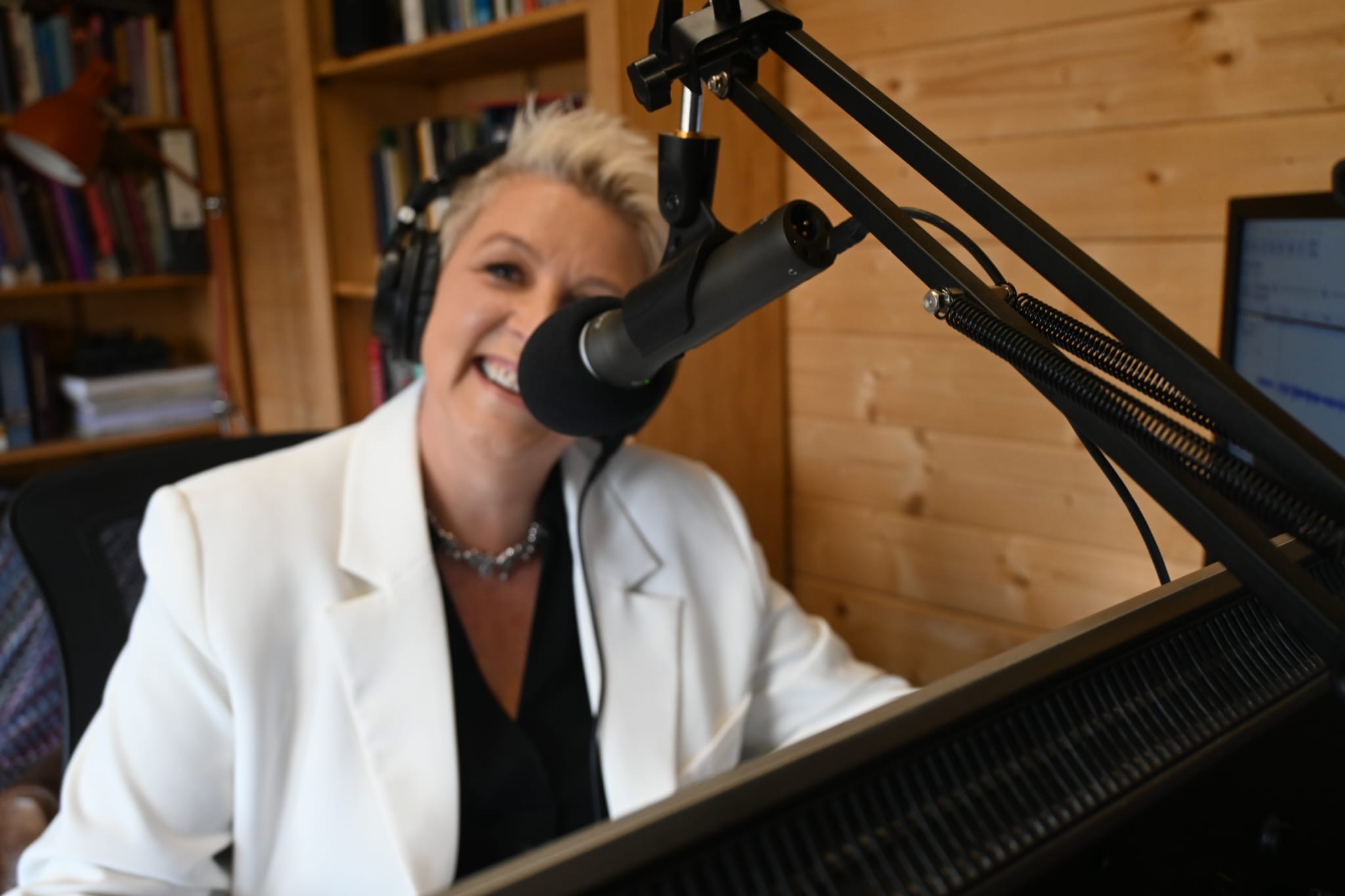
Legal academic / Author / Creator and Host of Criminal Justice in Action
A legal scholar specialising in criminal law and procedure, Candida spent two decades researching and teaching at the University of Nottingham. Her academic work focuses on how the criminal justice system operates in practice, particularly in rape and sexual assault cases, and those involving vulnerable witnesses. She has conducted extensive empirical research, including interviews with police officers and Crown Prosecutors about their decision-making, detailed analysis of case files, and first-hand observation of criminal trials in the Crown Courts.
Her research has been funded by bodies including the Nuffield Foundation and the Economic Social and Research Council, and has been published in leading peer-reviewed journals such as the Criminal Law Review, Oxford Journal of Legal Studies, International Journal of Evidence & Proof, and British Journal of Criminology.
In Rape on Trial, Candida draws on this research so we can see for ourselves how the criminal justice system really operates in the investigation and prosecution of rape and serious sexual offences. Not what we assume happens. Not what the conventional wisdom tells us happens. But what the evidence actually shows.
Every claim is grounded in data. Every episode is informed by rigorous academic inquiry.