(STILL) INSIDE A RAPE TRIAL: What really happens at court (1/4)
script for Rape on Trial/Ep 2: Tariq's Trial (blog post 1/3)
Rape on Trial is a legal documentary podcast using real-life, fully anonymised cases to critically examine the investigation and prosecution of rape and serious sexual offences in the criminal justice system in England & Wales.
This blog reproduces the first part of the original written script for Episode 2 which sees us back in the public gallery of a Crown Court somewhere in England & Wales for the final days of Tariq's trial on charges of rape and false imprisonment.
Topics covered in this episode: agreed facts; the defence case; the defendant's evidence-in-chief; cross-examination of the defendant; judge's directions; split directions; prosecuting counsel's closing speech; defence counsel's closing speech; judge's summary of the evidence and final directions; evidential reasoning and the operation of rape myths and prejudiced stereotypes and assumptions; the jury verdict.
Keywords: criminal law; criminal evidence and procedure; criminal justice; trial procedure; courtroom advocacy; adversarial legal system; comparative law and procedure; common law legal system; legal case study; criminology; forensic linguistics; forensic psychology.
Open Educational Resource - Legal English Listening Practice - Legal English Comprehension Practice - Legal English Vocabulary - Legal English in Real Court Proceedings: Criminal Trial – Academic English - Language of Law - Legal Reasoning - Evidential Reasoning - Forensic Reasoning – Court Translator Practice
Content warning
This podcast explores the workings of the criminal justice system, including the investigation and prosecution of serious offences involving sexual and physical violence.
Episodes may contain detailed and sometimes graphic accounts drawn directly from case files, witness testimony, and court proceedings, including those involving adult and child victims.
Listener discretion is advised.
INTRO
Welcome back to Criminal Justice in Action, the podcast that examines the workings of the criminal justice system in England and Wales in practice.
Each season takes a deep dive into a critical issue in contemporary criminal justice.
In Season One—Rape on Trial—we explore rape and serious sexual offences in the criminal process: when it works, when it doesn’t, and why it matters.
I’m Dr Candida Saunders and this is Episode Two.
If you’re new to the podcast, I recommend starting with Episode One. This isn’t a drop-in-and-out series—the cases covered and the issues they raise unfold over multiple episodes.
For returning listeners, here’s a brief recap.
Episode One saw us in Crown Court for the start of Tariq’s criminal trial. He’s charged with two offences: one count of rape, and one count of false imprisonment.
We heard the judge’s opening comments and instructions to the newly empanelled jury—known as judges’ homilies—followed by the prosecution’s opening speech, delivered by Mr Neil, the barrister instructed by the Crown Prosecution Service. He introduced himself and defence counsel, Miss Roberts, who represents Tariq.
Mr Neil outlined the prosecution’s case: that Tariq raped Ruby, an 18-year-old college student when she went to his office for a job interview and training. That’s the rape charge.
After the incident, Tariq blocked the door and pressured Ruby not to tell anyone—this is the false imprisonment charge.
Mr Neil also previewed the defence case: that, according to Tariq, he and Ruby engaged in consensual sex, initiated by Ruby after she danced for him, flirted, showed him photos of herself in swimwear, and agreed to go on holiday with him. That, according to Tariq, every touch, every act, was expressly consented to by Ruby who was not only consenting, but had initiated their sexual encounter. Tariq paid Ruby twenty pounds, believing that’s what she expected. That was essentially it for Day One, which was brought to an abrupt end by a technical issue with the court’s audio-visual equipment.
On Day Two, with the court’s IT issues resolved, we heard Ruby’s evidence-in-chief. That was presented in the form of a prerecorded video interview conducted by specially trained officers. Ruby was then cross-examined by Miss Roberts, live in court, but screened off from public and Tariq’s view.
We saw CCTV footage from Ruby’s bus journey after the interview, where she’s visibly distressed.
We also heard witness statements from Ruby’s mum and friends, describing her emotional state after her training with Tariq. Her friends all saying that Ruby wasn’t herself that day, but she clearly didn’t want to talk about whatever had happened.
Carole, Ruby’s mum recounted Ruby’s initial disclosure that she’d been sexually assaulted—and later, that she’d been raped.
Finally, we heard from Detective Constable Elliot; the officer in charge of the police investigation. She described some CCTV footage that’s no longer available. She also gave a detailed account of what Tariq said during his police interview following his arrest.
So that’s where we were up to when court adjourned yesterday. Today, Thursday morning, we’re back in court 1 for Day Three of Tariq’s trial, and we’re fast approaching the end of the prosecution’s case.
Day 3 of Trial
Morning discussions in the absence of the jury
It’s already 10.30 but the jury isn’t in yet. Just the judge, both counsel, Tariq and his dock entourage—the custody officer and the defendant’s interpreter—and us. Well, me.
Remember Selena? The witness who was refusing to come to court, apparently, because the complainant, Ruby, had told her not to?
Well, it looks like that’s a miscommunication. A message from Selena that’s been somewhat twisted in the course of it being passed from the witness service, to the court, to DC Elliot, to counsel, and then, finally, to the judge.
Ruby hasn’t told Selena not to testify, which is how it’s been interpreted so far. Rather, Ruby asked Selena not to be at court when Ruby’s own evidence was being heard.
Selena is at court this morning, Mr Neil is telling the judge, and she’s ready to testify.
For various reasons, including Selena not wanting to see the defendant, Mr Neil has alerted the court that he’ll be making a special measures application so that Selena can give her evidence in court behind a screen, like Ruby did.
Only now, now Selena’s actually travelled to court and time has been set aside to get a special measures direction for the witness, now Miss Roberts is telling the court that her client, Tariq, has told her, this morning, that he doesn’t want Selena to give evidence.
Now, in principle, it’s not up to the defendant which witnesses the prosecution does and doesn’t, can and cannot, call. In practice, however, they do have some influence in the sense that, if the defence accepts a witness’s evidence—if they don’t have any questions or challenges to put to a witness in cross-examination—then there’s no need to call that witness.
We saw that yesterday when the statements of Ruby’s mum and friends were read into evidence on the basis that they’d been agreed—accepted—by all the parties; the prosecution and the defence.
If you don’t want opposing counsel to call a particular witness then, you can accept that witness’s evidence. It doesn’t guarantee the witness won’t be called, but it reduces the chances.
The downside, if that’s the right way to put it, is that the judge will give that same direction that we heard yesterday, that the evidence in the witness’s statement is true and accurate because the parties agree that it is.
The upside, however, is two-fold.
One, the witness’s statement is read out by the prosecutor in that flat, neutral tone which can take the emotive power out of the witness’s evidence.
Two, you know exactly what that witness’s evidence will be; what’s going to be said. It’s all there; in the witness statement. No surprises. No being able to challenge or trip up the witness either, but no emotion, and no evidential surprises that might be devastating to your case.
The long and the short of it then is that the jury are not going to be hearing directly from Selena now. She’s not going to be called. Her statement will be read into evidence instead.
And the judge is, erm, displeased.
Her Honour’s ire isn’t aimed at defence counsel, who, says the judge, ‘has been put in an invidious position by her client by virtue of his quote obstructive and uncooperative behaviour towards the provision of clear instructions to his advocate’.
This judicial telling off, then, absent the jury, is aimed squarely at Tariq.
She can do little but register her dismay, the judge says, to the court at large. This is not a game, she says sharply. Selena has been brought to court because you instructed your advocate that you had questions that should be asked of her. Plainly, that is not the position.
She says there’s little she can do but offer the court’s apologies to the witness. She imagines that the fact she doesn’t have to give evidence at all will be a relief to Selena, rather than having to go into the witness box and answer pointless questions.
All of this is being translated to Tariq as he sits silently in the dock at the rear of the court.
Why is the judge annoyed? Why is she making this point? Well, maybe because she’s having a bad day? Maybe she’s just grumpy.
But I doubt that’s it.
I suspect it’s because this last-minute change of heart on Tariq’s part has prompted a lot of unnecessary work for the police, the prosecution, and, more importantly, a good deal of unnecessary and avoidable stress for Selena.
One of the reasons that the prosecution was seeking a special measures direction for Selena is that she’s heavily pregnant. And, for the last few days, Selena’s had Ruby telling her, I don’t want you at court while my evidence is being heard, while, at the same time, the prosecution, through the police, have been contacting her saying, ‘where are you? Why aren’t you at court’.
And now, today, she’s travelled to court only to be told she’s no longer needed because the defence has now decided they don’t have any questions for her and they’re accepting her statement.
That’s a lot of wasted time, and a lot of added stress. For everybody. Including the court.
Back to business: Mr Neil tells the judge that there are two videos to be played this morning—Ruby’s visit to the chain store, and the pharmacy. He’s not going to play the 999 call now; he’s taken on board what her Honour said yesterday and he’s content for the jury to have a transcript instead.
‘The jury will see Ruby’s spontaneity and consistency from that’, he says, ‘and they’ll have seen her distress from Ruby’s evidence yesterday’.
He'll begin, however, by reading Selena’s witness statement into evidence.
The jury is brought in and the hearing gets underway. It’s twenty to 11.
Trial resumes
Given the various issues surrounding Selena’s evidence, you might be expecting to hear something rather more profound and contentious than what’s actually contained in her brief witness statement, which Mr Neil is now reading to the jury.
Selena’s statement explains that she’d seen a job ad for health care workers. She’d rung the number and spoken to a man. He asked her to send him her CV, which she did. He rang her back saying he wasn’t taking on care workers, but he did need someone for secretarial work.
Selena wasn’t looking to work office hours and so had declined. But he asked her if she had any friends who might be interested. She did: Selena sent Ruby the ad, and Olivia. Ruby later told Selena she’d got an interview. She wished Ruby luck and told her to call when it was finished.
She did; Ruby rang her at about 2 that afternoon. She sounded sad, says Selena. She told me to tell Olivia not to go anywhere near the man. Selena’s statement goes on to say that, she was in town with her friend that day so they all met up. Ruby, who is normally bouncing around and stuff, seemed quiet and upset.
I kept asking Ruby what was wrong, the statement says, but she wouldn’t tell me. Selena decided not to push it; to leave it until Ruby was willing to speak about it. She knew there was something wrong because Ruby didn’t eat much and she’s always eating.
Selena says she messaged Ruby after, asking if she was alright. Ruby told Selena she’d been to the police but never told her what happened. Selena still doesn’t know.
Next, Mr Neil plays two videos.
The first is CCTV footage from the chain store. It shows Ruby, waiting in line at the tills, then paying for some pants and leaving the store.
The second video is the purchasing of the morning after pill. We see Ruby entering the pharmacy. She speaks to the pharmacist, then she takes a seat elsewhere in the store. You see Ruby take a call on her phone, then go back to the counter and collect a packet.
Mr Neil tells the jury that the transcript of Ruby’s 999 call will be distributed, which they can read themselves. It’s not going to be read into the record.
He now turns to the judge: That, your Honour, is the Crown’s case.
The judge looks to Miss Roberts.
The defence case begins
The defence will be calling the defendant, says Miss Roberts, but she needs to take instruction first. She asks if the jury might be sent out now in order for her to do that: she estimates she’ll need 40 minutes.
The jury is sent out for a break. When they get back, we’re going to be hearing from Tariq himself. Which isn’t rare in rape cases, but it’s not routine.
The defendant’s evidence-in-chief
Forty-five minutes later, at 11.35, Tariq takes the stand.
He’s going to be answering questions through an interpreter, says Miss Roberts, because, while Tariq understands some English, it's easier to respond in Arabic.
Tariq confirms he's the owner of the company named in the job ad, and that he’d set this company up just two weeks before Ruby's visit.
Before that, he'd worked as a health care assistant at a hospital through an agency. He'd decided to set up his own agency. The ad was to recruit agency staff for his new venture.
When questioned about his first contact with Ruby, Tariq explains that he'd initially responded to a video on her WhatsApp status—the same video that contained the bikini image.
When asked directly by Miss Roberts why he'd responded to that specific video rather than by contacting Ruby via their message thread, Tariq explains that it’s easier to talk to someone that way on WhatsApp rather than having to search for a name in a list.
His evidence progresses methodically through the messages exchanged before Ruby's visit, setting up the interview and so on; that he was going to train her in dealing with customers and answering the phone.
Then, to the day in question.
Tariq says he’d asked her to do some research for him into setting up another company. Then he left her alone in the office, for about fifteen minutes, while he went to the post office.
When he got back, Ruby hadn’t completed the task he’d given her. She told him, says Tariq, that she didn’t know how to do the task, she only knows about dance.
He says Ruby then told him she didn’t want voluntary work, she wanted paid work. ‘I told her I could give her only £5 a day, and only more when the company was operational’.
‘How did she respond to that?’ asks Miss Roberts.
‘She didn’t’, says Tariq.
‘Did she leave?’ asks Miss Roberts.
‘No’, says Tariq, ‘she started talking about personal things’.
‘You say personal things, what were those personal things?’ Miss Roberts asks.
Tariq doesn’t answer.
Instead, he starts to cry.
Loudly.
The judge leans towards him. ‘Tariq, are you alright?’ she asks. ‘There’s some water there. Have some water.’
Tariq doesn’t take any water.
Instead, he directly addresses the jury. He’s pretty much incomprehensible because he’s crying, wailing and gabbling, and gesticulating.
The judge’s gentleness is gone. She’s immediately on him.
‘Tariq! Tariq. TARIQ!’
He stops talking but the sobs and gasps continue.
‘It is not the time for you to make a speech from the witness box’, says the judge. ‘You’ve been asked a question, and you’ve told the jury that she initiated it and I think you said something about Spain. Now take a breath, try and compose yourself. Listen carefully to the questions and just answer the questions and this whole process of you giving evidence will be over quickly and the jury will be able to hear your answers. Now, what was the rest of the answer you gave to the interpreter please?’
Tariq continues to wail and sob and sniff as he talks to the interpreter in a strained, high pitched voice.
It takes a while.
In fact, everything with this interpreter and defendant is taking a while.
I’ve seen lots of defendants with interpreters, but this trial has been something else. It’s been almost comedic at times: a short question from counsel takes an oddly long time to translate, Tariq then speaks to his interpreter for what feels like an age, the translator then basically says, yes or some other very short answer that just doesn’t seem to tally with the protracted conversation that led up to it.
It feels like that’s what’s happening now. Another suspiciously long discussion, punctuated with wails and sobs from Tariq.
Throughout all of this, Miss Roberts is leaning against her bench, arms crossed, just staring at the judge, looking deeply unimpressed.
Eventually, the interpreter says: ‘She told me she went to Spain then she showed me some pictures in a bikini. And there was two other girls with her, other friends. Then she opened the photo and she zoomed in, then she got close to me and then she showed me the picture.’
Having regained his composure, Tariq goes on to describe an increasingly intimate encounter where he repeatedly asked for consent to each and every progressive act: to touch her hair; to touch her leg;, to kiss her. Each request, he claims, was explicitly granted by Ruby.
‘I told her I wanted to learn how to dance,’ he says, ‘and she said there's an easy dance I'm going to teach you. I handed the phone over to her so she can choose the music.’
He talks about consensual kissing, stroking, touching, and eventually sex on a mat on the floor.
Asked about the moment of penetration, Tariq says: ‘Then I was on top of her and coming with my penis inside and then she say stop. Then I took it out, immediately.’
‘Was that the first time she had said stop?’ asks Miss Roberts.
‘Yes,’ Tariq replies.
‘At any stage before that point, had she tried to push you away?’
‘No’, he answers, ‘she was hugging me and kissing me’.
‘So after you stopped’, says Miss Roberts, ‘what did you do?’
He ejaculated on her leg.
‘Did she say anything when you ejaculated on her leg?’ asks Miss Roberts
‘No.’
It’s after 1 pm and the judge halts proceedings so court can break for lunch.
Read parts 2-4 for the remainder of the script.
This episode script from Rape on Trial is licensed under a Creative Commons Attribution–NoDerivatives 4.0 International Licence (CC BY‑ND 4.0). © Dr Candida Saunders.
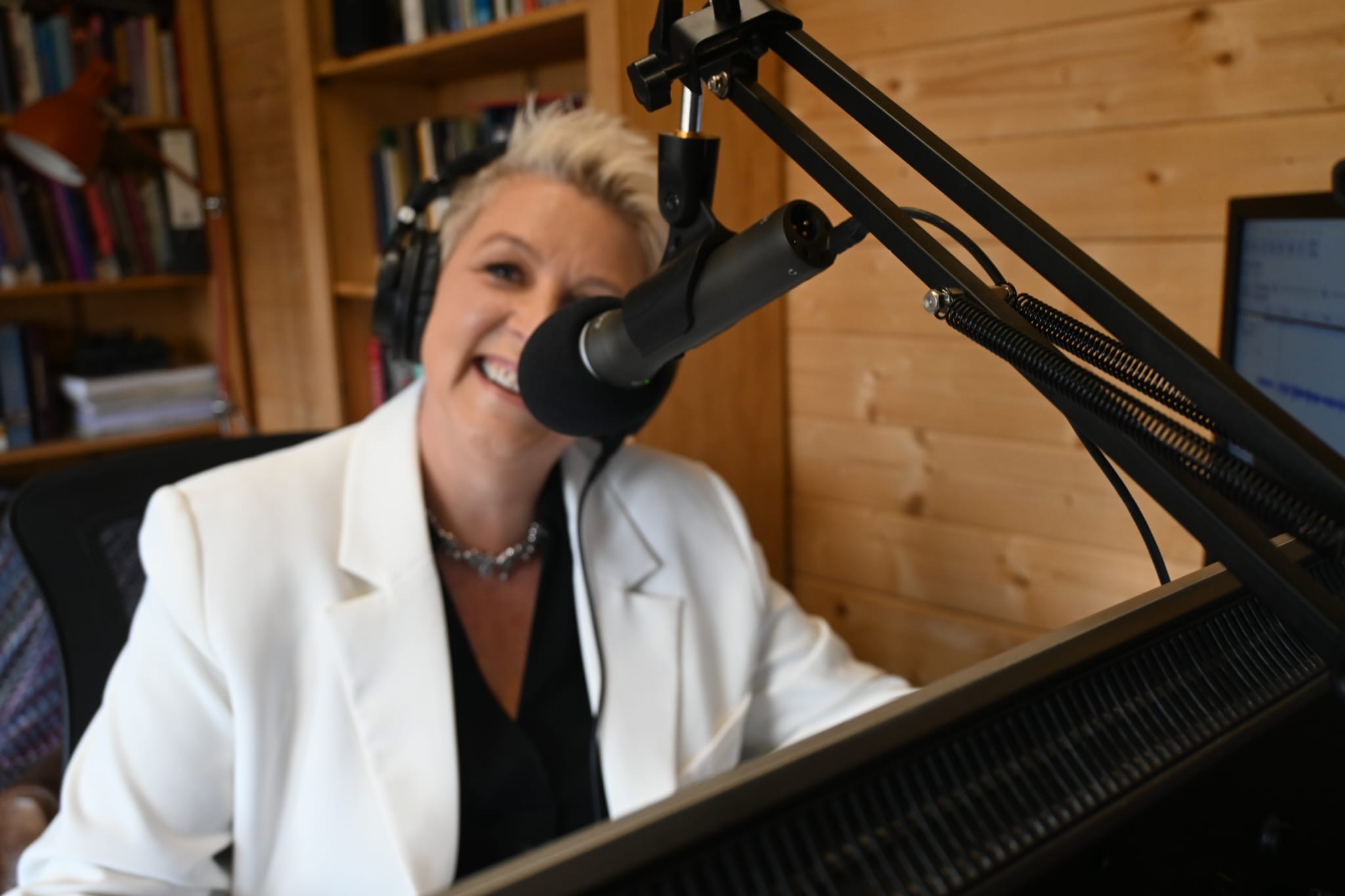
Legal academic / Author / Creator and Host of Criminal Justice in Action
A legal scholar specialising in criminal law and procedure, Candida spent two decades researching and teaching at the University of Nottingham. Her academic work focuses on how the criminal justice system operates in practice, particularly in rape and sexual assault cases, and those involving vulnerable witnesses. She has conducted extensive empirical research, including interviews with police officers and Crown Prosecutors about their decision-making, detailed analysis of case files, and first-hand observation of criminal trials in the Crown Courts.
Her research has been funded by bodies including the Nuffield Foundation and the Economic Social and Research Council, and has been published in leading peer-reviewed journals such as the Criminal Law Review, Oxford Journal of Legal Studies, International Journal of Evidence & Proof, and British Journal of Criminology.
In Rape on Trial, Candida draws on this research so we can see for ourselves how the criminal justice system really operates in the investigation and prosecution of rape and serious sexual offences. Not what we assume happens. Not what the conventional wisdom tells us happens. But what the evidence actually shows.
Every claim is grounded in data. Every episode is informed by rigorous academic inquiry.